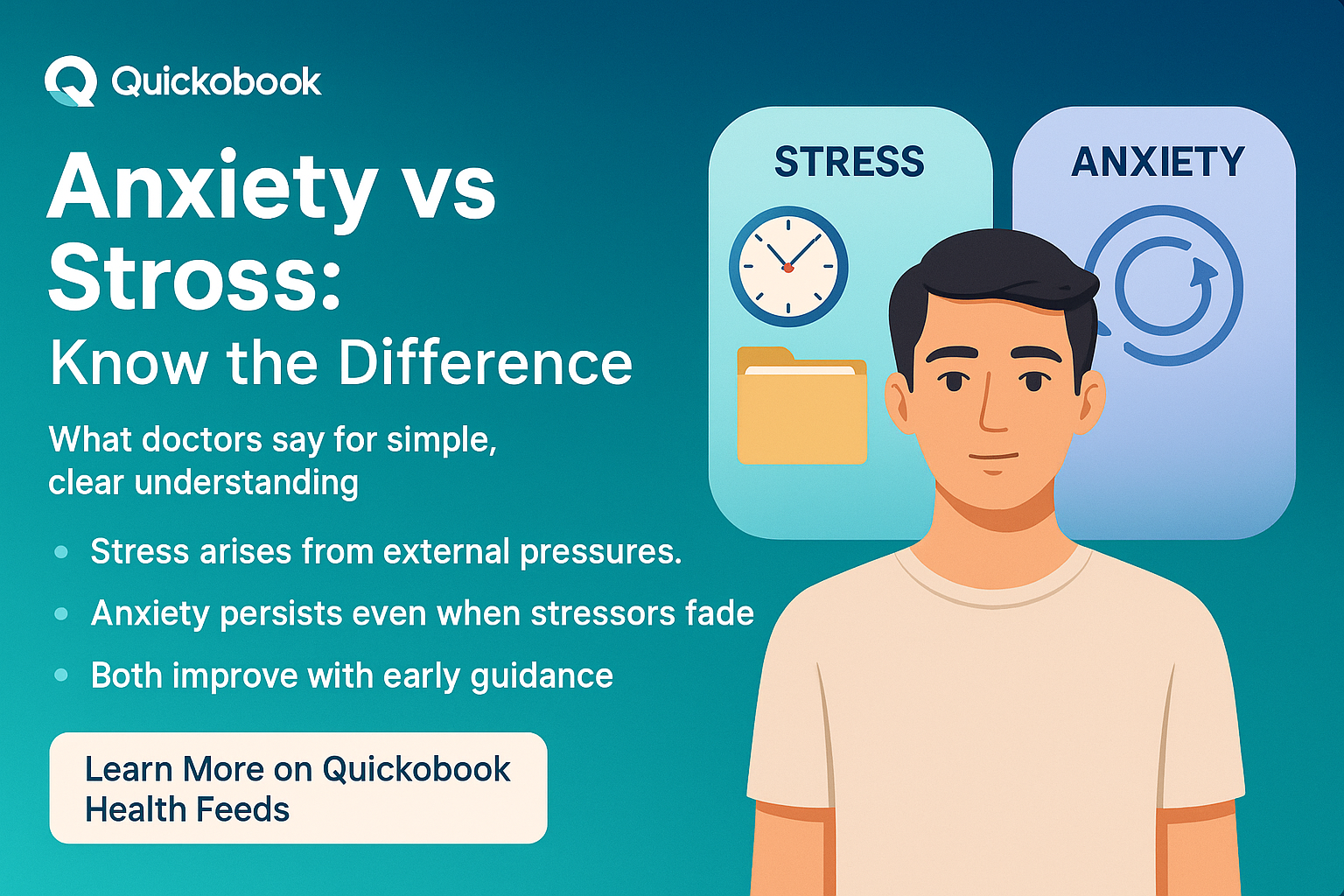

Introduction: Anxiety vs Stress — What Doctors Explain Simply
Many people in India think anxiety and stress are the same thing. But doctors explain that they are different, even though they feel similar. Both can affect your mental health, body, emotions, work performance, studies, relationships, and daily routine.
This simple guide helps you understand how anxiety and stress differ, their symptoms, causes, diagnosis, treatment, and when to seek medical help.
What Is Anxiety?
Definition
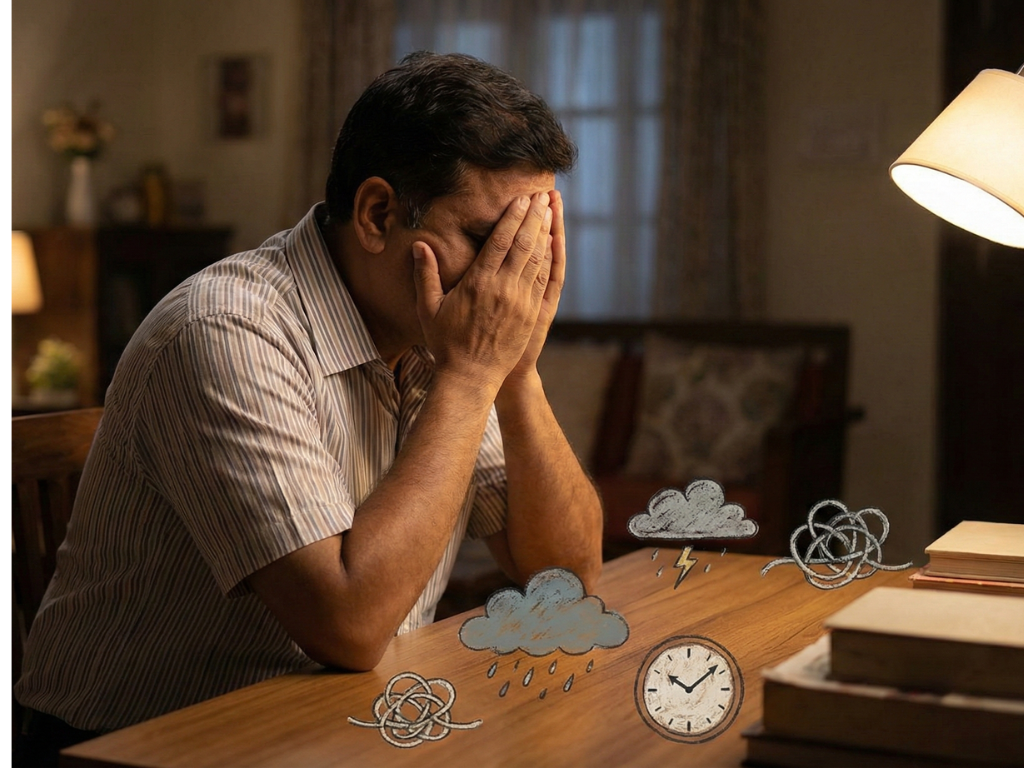
Anxiety is a long-lasting feeling of worry or fear that continues even when the situation has improved.
Key Features
-
Stays for weeks or months
-
Hard to control
-
Can occur without a clear reason
-
May cause panic attacks
-
Affects daily life and relationships
What Is Stress?
Definition
Stress is the body’s short-term reaction to pressure, deadlines, or challenges.
Key Features
-
Usually temporary
-
Trigger-based
-
Can be positive or negative
-
Ends when the situation ends
Anxiety vs Stress: Simple Differences
Key Distinctions
| Topic | Stress | Anxiety |
|---|---|---|
| Cause | Clear trigger | Often no trigger |
| Duration | Short-term | Long-term |
| Feelings | Pressure | Fear or dread |
| Control | Usually manageable | Hard to control |
| Diagnosis | Not a disorder | Can be a disorder |
Causes of Stress and Anxiety
Common Causes of Stress
-
Exams
-
Work pressure
-
Money issues
-
Traffic
-
Family responsibilities
ALSO READ: Seasonal Flu In India: Symptoms, Treatment, Prevention & Best Immunity Boosters For Fast Recovery
Common Causes of Anxiety
-
Trauma
-
Long-term stress
-
Family history
-
Thyroid issues
-
Hormonal imbalance
Symptoms: Anxiety vs Stress
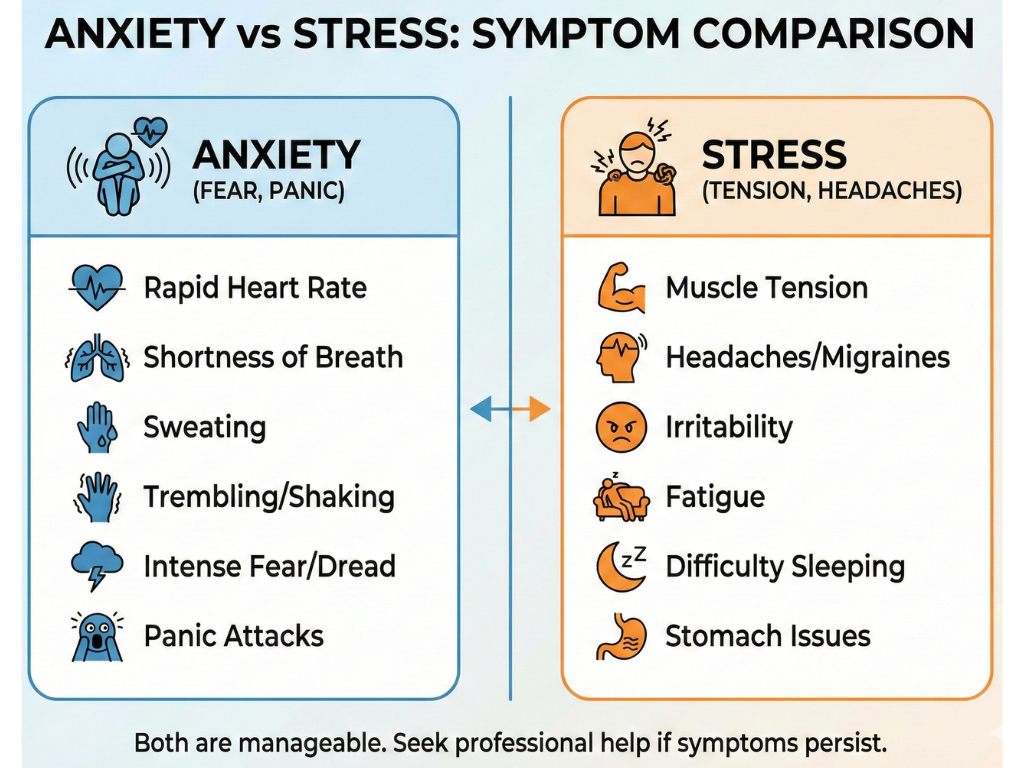
Stress Symptoms
-
Irritability
-
Headache
-
Muscle tension
-
Tiredness
-
Sleep issues
Anxiety Symptoms
-
Extreme worry
-
Restlessness
-
Fast breathing
-
Panic attacks
-
Chest tightness
-
Stomach problems
Diagnosis of Anxiety
How Doctors Diagnose
-
Ask about symptoms
-
Check lifestyle
-
Conduct blood tests (like thyroid)
-
Use anxiety scales like GAD-7
Treatment Options for Anxiety and Stress
Lifestyle Changes
-
Yoga
-
Daily exercise
-
Deep breathing
-
Reducing caffeine
-
Better sleep routine
Therapy
-
Cognitive Behavioural Therapy (CBT)
Medication
-
Only by psychiatrist prescription
-
Dosage varies per patient
Stress Management Tips
Daily Strategies
-
Break tasks into smaller steps
-
Time management
-
Relaxation exercises
-
Saying “no” when needed
When to See a Doctor
Seek help if you notice:
-
Symptoms continue for more than 2–4 weeks
-
Panic attacks
-
Sleep issues
-
Difficulty working or studying
-
Feelings of hopelessness
-
Physical symptoms like chest tightness
Risks & Complications
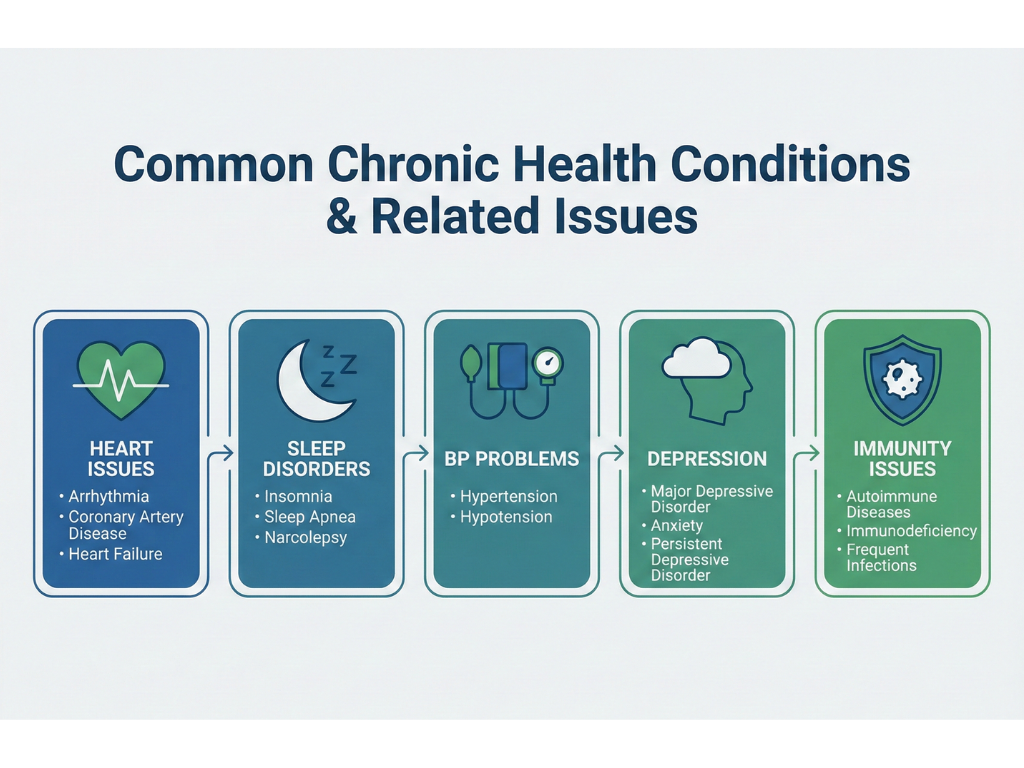
Ignoring symptoms may lead to:
-
High BP
-
Heart issues
-
Weak immunity
-
Depression
-
Relationship issues
-
Sleep problems
Prevention Tips for Better Mental Health
Simple habits to follow
-
Exercise regularly
-
Eat balanced meals
-
Reduce screen time at night
-
Practice mindfulness
-
Limit tea/coffee
-
Write down worries
-
Spend time with loved ones
50 FAQs: Anxiety vs Stress (Short & Simple)
-
Q: Are stress and anxiety the same?
A: No, stress is short-term; anxiety lasts longer. -
Q: Can stress turn into anxiety?
A: Yes, long-term stress may lead to anxiety disorders. -
Q: Does anxiety affect sleep?
A: Yes, it often causes insomnia. -
Q: Can students experience anxiety?
A: Yes, it is very common among students. -
Q: What is a panic attack?
A: A sudden episode of fear with fast heartbeat and breathlessness. -
Q: Can stress cause headaches?
A: Yes, tension headaches are common. -
Q: Can anxiety cause chest pain?
A: Yes, but a doctor should rule out heart issues. -
Q: Is anxiety a mental health disorder?
A: Anxiety can be a disorder if long-lasting. -
Q: Can anxiety cause digestive issues?
A: Yes, it may cause nausea or acidity. -
Q: Does yoga reduce anxiety?
A: Yes, it helps the mind relax. -
Q: Can stress cause hair fall?
A: Yes, stress affects hair cycles. -
Q: Is therapy useful?
A: Yes, therapy helps manage thoughts and emotions. -
Q: Can children have anxiety?
A: Yes, even young children. -
Q: Can anxiety cause dizziness?
A: Yes, especially during panic. -
Q: Does caffeine worsen anxiety?
A: Yes, too much caffeine increases restlessness. -
Q: Can anxiety go away?
A: Yes, with treatment and lifestyle changes. -
Q: Does stress affect the skin?
A: Yes, it can worsen acne. -
Q: Can anxiety affect appetite?
A: Yes, appetite may increase or decrease. -
Q: Does exercise reduce stress?
A: Yes, it lowers stress hormones. -
Q: Can anxiety cause fast heartbeat?
A: Yes, palpitations are common. -
Q: Is medication always needed?
A: Not always—mild anxiety may need only therapy. -
Q: Does anxiety affect memory?
A: Yes, overthinking reduces focus. -
Q: Can stress affect periods?
A: Yes, stress can delay cycles. -
Q: Is anxiety genetic?
A: Family history increases risk. -
Q: Can stress cause stomach pain?
A: Yes, stress affects digestion. -
Q: Does meditation help anxiety?
A: Yes, very effective. -
Q: Can anxiety last for years?
A: Yes, if untreated. -
Q: Can social media increase anxiety?
A: Yes, due to comparison and overload. -
Q: Are panic attacks harmful?
A: They feel scary but are not life-threatening. -
Q: Can anxiety cause sweating?
A: Yes, due to fear response. -
Q: Does stress affect blood pressure?
A: Yes, long-term stress can raise BP. -
Q: Can anxiety cause numbness?
A: Yes, during fast breathing. -
Q: Can stress cause anger issues?
A: Yes, irritability increases. -
Q: Does deep breathing help?
A: Yes, it calms the mind. -
Q: Can anxiety occur without a reason?
A: Yes, often there is no clear trigger. -
Q: Can stress weaken immunity?
A: Yes, long-term stress lowers resistance. -
Q: Is online therapy effective?
A: Yes, for many people it works well. -
Q: Can anxiety affect relationships?
A: Yes, due to fear and overthinking. -
Q: Can stress cause insomnia?
A: Yes, very commonly. -
Q: Is anxiety common in India?
A: Yes, millions experience it. -
Q: Can hobbies reduce stress?
A: Yes, they relax the mind. -
Q: Does walking reduce anxiety?
A: Yes, it improves mood. -
Q: Can anxiety cause restlessness?
A: Yes, feeling “on edge” is common. -
Q: Can stress cause overthinking?
A: Yes, it increases mental pressure. -
Q: Does drinking water reduce anxiety?
A: It helps, but is not a full treatment. -
Q: Can anxiety affect breathing?
A: Yes, it causes rapid breathing. -
Q: Should I avoid caffeine?
A: Yes, if you have anxiety. -
Q: Can anxiety affect productivity?
A: Yes, concentration becomes difficult. -
Q: Does screen time affect stress?
A: Yes, excess screen time increases tension. -
Q: Should I see a psychiatrist for anxiety?
A: Yes, if symptoms last long or affect daily life.
Conclusion
Stress is a short-term response, while anxiety is long-term and often harder to control. Understanding the difference helps you take care of your mental health early and avoid complications.
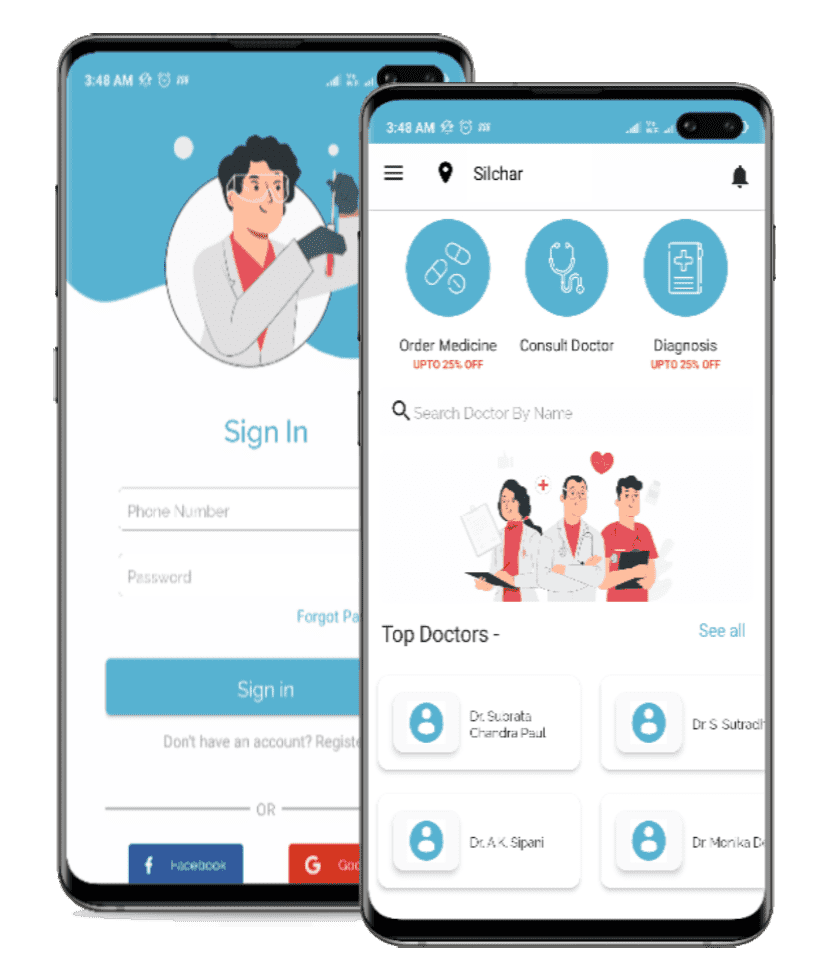
Quickobook CTA
-
Book a psychologist or psychiatrist on Quickobook
-
Online and in-clinic consultations
-
Verified doctors across India
-
Easy appointment scheduling
Disclaimer
This article is for educational purposes only. It does not replace medical advice. Always consult a doctor for diagnosis and treatment.


Comments (0)
No comments yet. Be the first to share your thoughts!
Leave a Comment