
Introduction
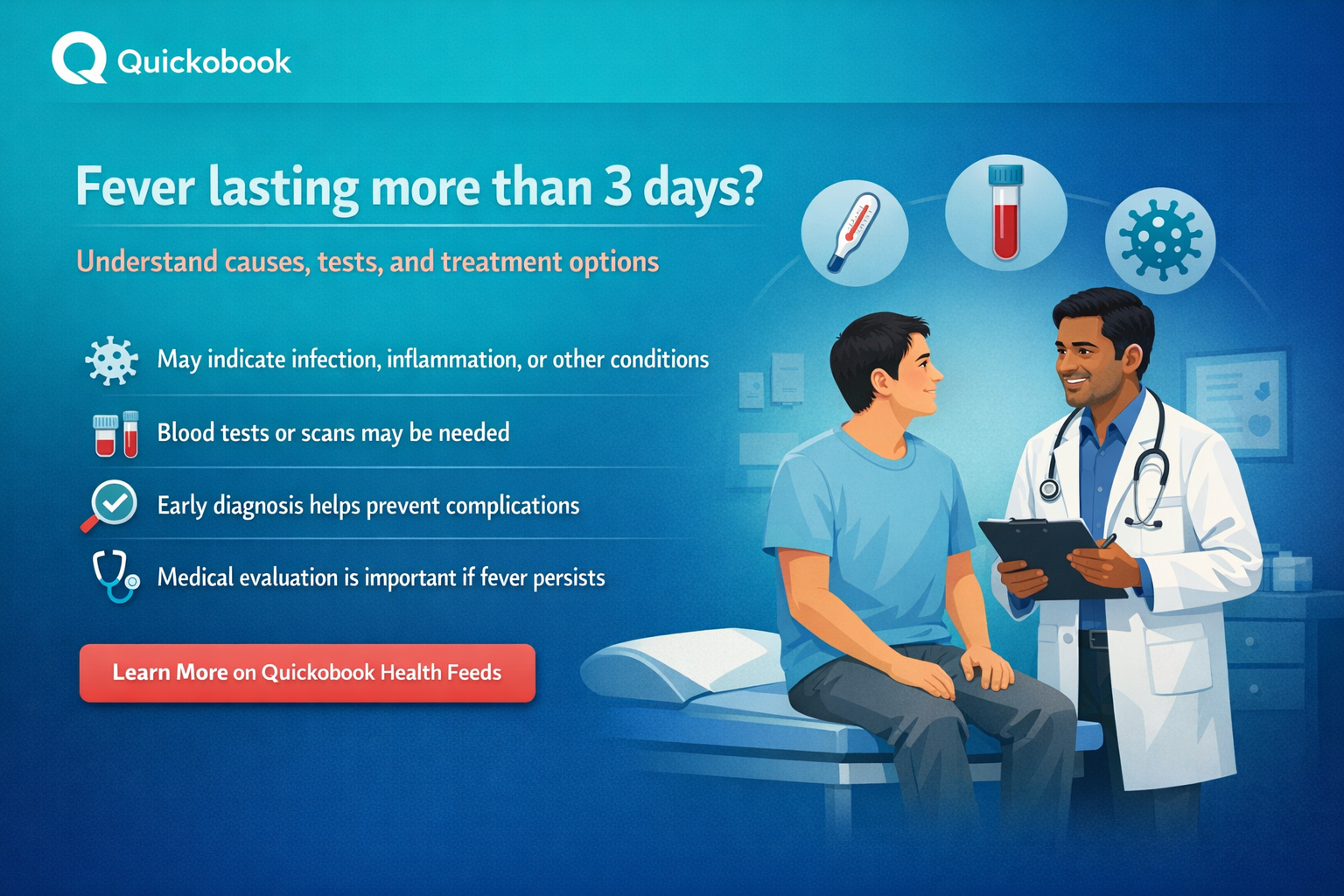
Fever is one of the most common reasons people visit a doctor. A mild fever for a day or two often happens due to viral infections and settles on its own. Fever for more than 3 days should never be ignored. It can be a sign that your body is fighting something more serious.
In India, prolonged fever is commonly linked to viral infections, bacterial diseases, mosquito-borne illnesses, or underlying medical conditions. Knowing the causes, required blood tests for fever, and treatment options can help you act early and avoid complications.
This guide explains everything in simple language so you know what to do and when to seek medical help.
What Does Fever for More Than 3 Days Mean?
Fever means your body temperature is higher than normal. For most adults, this is above 98.6°F (37°C). Doctors usually become concerned when:
- Fever lasts more than 72 hours
- Temperature stays above 101°F (38.3°C)
- Fever keeps coming back even after medicine
A prolonged fever often means the body needs medical evaluation.
Common Causes of Fever for More Than 3 Days
Viral Infections
Viruses are the most common cause. Viral fever may last 3–7 days and is often accompanied by:
- Body pain
- Headache
- Cold or cough
- Weakness
Some viral fevers take longer to recover, especially if rest is inadequate.
Bacterial Infections
Bacterial infections usually cause persistent or worsening fever. Common examples include:
- Typhoid
- Urinary tract infection
- Pneumonia
- Throat or sinus infection
These usually require antibiotics prescribed by a doctor.
Mosquito-Borne Diseases
In India, mosquito-related illnesses are a major cause of prolonged fever:
- Dengue
- Malaria
- Chikungunya
They often present with high fever, severe body pain, headache, or low platelet count.
COVID-19 and Post-Viral Fever
Some people continue to have fever even after the main infection subsides. This is called post-viral fever and needs monitoring.
Other Medical Conditions
Less common but important causes include:
- Tuberculosis
- Autoimmune diseases
- Thyroid disorders
- Certain cancers
Symptoms That May Occur Along With Fever
Fever alone may not be serious, but watch out if it comes with:
- Severe headache
- Vomiting or diarrhea
- Skin rashes
- Joint pain
- Cough or breathlessness
- Burning while urinating
- Extreme weakness
These clues help doctors identify the cause faster.
Blood Tests for Fever: What Doctors Usually Recommend
When fever lasts more than 3 days, doctors often advise a blood test for fever to find the exact reason.
Common Tests Include
Complete Blood Count (CBC)
Checks white blood cells, red blood cells, and platelets. It helps identify infection and conditions like dengue.
C-Reactive Protein (CRP)
Shows inflammation in the body and helps distinguish between viral and bacterial infections.
Malaria Test
Done through blood smear or rapid antigen test.
Dengue Test
Includes NS1 antigen and antibody tests depending on fever duration.
Typhoid Test
Blood culture or antibody tests may be advised.
Urine Test
Used when urinary infection is suspected.
The cost of basic fever tests in India usually ranges from ₹500 to ₹2,000, depending on the city and test type.
READ ALSO: Heart Attack Cases Rising In India: Doctors Warn Of Lifestyle And Stress Risks
Treatment for Fever for More Than 3 Days
Medicines
- Paracetamol is commonly used to reduce fever
- Antibiotics are prescribed only if bacterial infection is confirmed
- Antimalarial or antiviral medicines are given based on diagnosis
Never self-medicate with antibiotics.
Rest and Fluids
- Adequate rest helps recovery
- Drink water, coconut water, ORS, and soups
- Avoid dehydration, especially in high fever
Hospital Admission
Hospital care may be needed if:
- Fever is very high
- Platelet count drops
- Patient is elderly, pregnant, or has chronic illness
Home Care Tips While Monitoring Fever
- Check temperature twice daily
- Use light clothing
- Avoid alcohol and smoking
- Eat soft, nutritious foods
- Do not ignore worsening symptoms
When to See a Doctor Immediately
Consult a doctor urgently if:
- Fever lasts more than 3 days
- Temperature crosses 103°F
- There is confusion or drowsiness
- Persistent vomiting or breathlessness occurs
- Fever in infants or elderly
Early medical care prevents serious complications.
Possible Risks and Complications
Untreated prolonged fever can lead to:
- Dehydration
- Low platelet count
- Organ damage
- Spread of infection
- Longer recovery time
Timely diagnosis is the key to safe recovery.
Prevention Tips
- Maintain hand hygiene
- Drink clean, boiled water
- Prevent mosquito breeding at home
- Use mosquito repellents
- Complete prescribed medicines
Conclusion
Fever for more than 3 days is your body’s warning sign. While many causes are treatable, ignoring symptoms can delay recovery. Simple blood tests for fever help doctors find the cause and start proper treatment quickly.
If your fever is not settling, do not wait. Early consultation ensures faster relief and peace of mind.
Book a Doctor Easily with Quickobook
Quickobook helps you:
- Find nearby general physicians
- Book same-day appointments
- Avoid long waiting times
- Get trusted medical advice
Your health should never wait.
Frequently Asked Questions (FAQs)
Q1. Is fever for more than 3 days serious?
A. It can be serious and should be checked by a doctor.
Q2. Can viral fever last more than 3 days?
A. Yes, some viral fevers last up to a week.
Q3. What is the best blood test for fever?
A. CBC is usually the first and most important test.
Q4. Should I take antibiotics for fever?
A. Only if prescribed by a doctor.
Q5. Can stress cause prolonged fever?
A. Stress alone rarely causes fever.
Q6. Is dengue fever always severe?
A. Not always, but it needs close monitoring.
Q7. Can children have fever for more than 3 days?
A. Yes, and they should be evaluated early.
Q8. What temperature is considered high fever?
A. Above 101°F in adults.
Q9. Can dehydration cause fever?
A. It can worsen fever but is rarely the main cause.
Q10. Is fever without cold or cough dangerous?
A. It may suggest non-respiratory infection.
Q11. Can fever come and go during the day?
A. Yes, especially in infections like malaria.
Q12. What foods are best during fever?
A. Light, soft foods and fluids.
Q13. Is bed rest important during fever?
A. Yes, it helps faster recovery.
Q14. Can fever be caused by urinary infection?
A. Yes, especially with burning urination.
Q15. Should I sponge with cold water?
A. Use lukewarm water, not cold.
Q16. Can fever cause low platelets?
A. Yes, especially in dengue.
Q17. Is fever after vaccination normal?
A. Mild fever is common and temporary.
Q18. Can COVID cause prolonged fever?
A. Yes, in some cases.
Q19. Can fever cause weakness?
A. Yes, it is very common.
Q20. Is fever always due to infection?
A. No, other conditions can also cause it.
Q21. How often should temperature be checked?
A. Two to three times daily.
Q22. Can fever damage organs?
A. Very high or untreated fever can.
Q23. Is paracetamol safe daily?
A. Yes, within doctor-recommended dose.
Q24. Can lack of sleep worsen fever?
A. Yes, rest is essential.
Q25. Can fever be allergic?
A. Allergies rarely cause fever.
Q26. Can thyroid problems cause fever?
A. Rarely, but possible.
Q27. Is fever in elderly dangerous?
A. Yes, it needs prompt evaluation.
Q28. Can fever cause dehydration?
A. Yes, drink fluids regularly.
Q29. Is blood culture always required?
A. Only if doctor suspects bacterial infection.
Q30. Can fever resolve without treatment?
A. Mild viral fever can.
Q31. What is intermittent fever?
A. Fever that comes and goes.
Q32. Can fever be due to TB?
A. Yes, long-term fever is a symptom.
Q33. Can fever affect blood pressure?
A. It may temporarily change it.
Q34. Is fever after travel concerning?
A. Yes, especially for mosquito diseases.
Q35. Can fever cause headache?
A. Yes, very commonly.
Q36. Can fever be seasonal?
A. Yes, viral fevers are seasonal.
Q37. Should I avoid bathing during fever?
A. Bathing is fine if water is lukewarm.
Q38. Can fever spread to others?
A. Infectious causes can be contagious.
Q39. How long does recovery take?
A. Depends on cause, usually days to weeks.
Q40. Is fever dangerous in pregnancy?
A. Yes, consult a doctor immediately.
Q41. Can fever affect appetite?
A. Yes, appetite often reduces.
Q42. Can fever cause chills?
A. Yes, especially in infections.
Q43. Should I work during fever?
A. No, rest is advised.
Q44. Can fever cause sweating?
A. Yes, especially when it breaks.
Q45. Is fever always painful?
A. Not always, pain varies.
Q46. Can fever recur after treatment?
A. Yes, if infection is not fully treated.
Q47. Can fever be life-threatening?
A. Rarely, but possible if ignored.
Q48. Is fever common in monsoon season?
A. Yes, due to infections.
Q49. Can fever affect children differently?
A. Yes, they may worsen faster.
Q50. When should I not delay doctor visit?
A. If fever lasts more than 3 days.





Comments (0)
No comments yet. Be the first to share your thoughts!
Leave a Comment