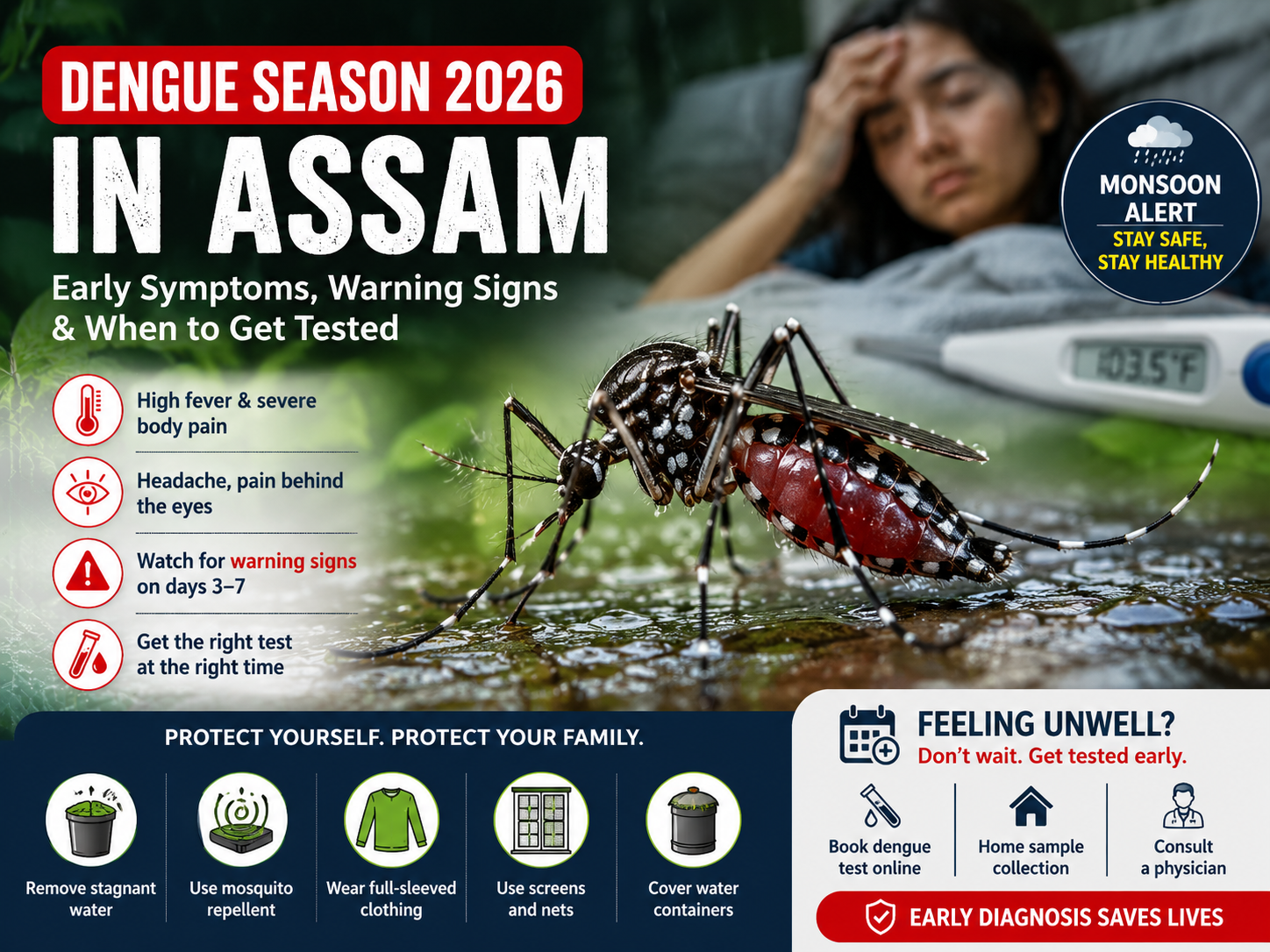

The monsoon season brings much-needed relief from the summer heat across Assam and Northeast India. However, it also marks the beginning of the annual surge in mosquito-borne diseases, with dengue fever being one of the most common and concerning illnesses. Every year between July and October, hospitals and clinics in Silchar, Guwahati, Dibrugarh, Jorhat, and other parts of Assam witness a significant rise in patients reporting high fever, severe body pain, and weakness. Unfortunately, many people mistake the early symptoms of dengue for a common viral fever, delaying diagnosis and increasing the risk of complications.
Recognizing dengue at an early stage can make a significant difference in recovery. Early testing, proper hydration, timely medical consultation, and close monitoring are the keys to preventing severe illness.
In this comprehensive guide, you'll learn how dengue spreads, the symptoms to watch for, warning signs that require immediate medical attention, which tests are recommended, available treatment options, and practical prevention measures to protect yourself and your family during the 2026 monsoon season.
What Causes Dengue?
Dengue is a viral infection caused by the dengue virus and is transmitted through the bite of an infected Aedes aegypti mosquito. Unlike mosquitoes that spread malaria, Aedes mosquitoes are active primarily during the daytime, especially during the early morning and late afternoon.
These mosquitoes breed in clean stagnant water, making the monsoon season particularly dangerous. Common breeding sites include:
- Flower pots
- Air cooler trays
- Open water tanks
- Buckets
- Coconut shells
- Discarded tyres
- Construction sites
- Blocked drains
Continuous rainfall and waterlogging across Assam create ideal breeding conditions, causing mosquito populations to increase rapidly. Even small amounts of standing water can become breeding grounds within a few days.
Early Symptoms of Dengue
Symptoms usually begin 4–7 days after the bite of an infected mosquito. During the initial stage, dengue often resembles seasonal viral fever, making early diagnosis challenging.
The most common symptoms include:
- Sudden high fever, often reaching 103–105°F
- Severe headache
- Pain behind the eyes
- Intense muscle and joint pain
- Severe body ache, earning dengue the nickname "breakbone fever"
- Nausea and vomiting
- Extreme fatigue and weakness
- Loss of appetite
- Skin rash developing after two to five days
- Mild bleeding from the nose or gums in some patients
One of the biggest differences between dengue and a common viral infection is the severity of body pain and headache. Many patients describe the pain as overwhelming and unlike anything experienced with ordinary fever.
If you develop high fever accompanied by severe body pain during the monsoon season, it is advisable to consult a general physician rather than waiting for symptoms to improve on their own.
Dengue Warning Signs: When Should You See a Doctor Immediately?
While many people recover from dengue with supportive care, some patients develop severe dengue, which can become life-threatening if left untreated.
The critical period usually occurs between the third and seventh day of illness, often when the fever starts coming down. Many patients mistakenly assume they are recovering because the fever decreases, but this is when complications can develop rapidly.
Seek immediate medical attention if you experience:
- Severe abdominal pain
- Continuous vomiting
- Difficulty drinking fluids
- Bleeding gums
- Blood in vomit
- Blood in stool
- Rapid breathing
- Shortness of breath
- Persistent dizziness
- Extreme weakness
- Restlessness
- Confusion
- Cold or clammy skin
- Very little urine output
These symptoms may indicate plasma leakage or internal bleeding, requiring urgent hospital care.
Do not attempt self-treatment if any warning signs appear.
Which Dengue Test Should You Get?
Choosing the right test depends on how many days have passed since your fever started.
NS1 Antigen Test (Day 1–5)
The NS1 Antigen Test detects proteins from the dengue virus itself and is considered the most reliable investigation during the first five days of illness.
Doctors often recommend this test when patients develop:
- High fever
- Severe body pain
- Headache
- Weakness during monsoon
The earlier the test is performed, the more accurate the result tends to be.
IgM Antibody Test (After Day 5)
After approximately five days, the body's immune system begins producing antibodies against the virus.
At this stage, the IgM Antibody Test becomes more useful than the NS1 test for confirming dengue infection.
Complete Blood Count (CBC)
A CBC remains one of the most important investigations throughout dengue illness.
Doctors use CBC reports to monitor:
- Platelet count
- White blood cell count
- Hematocrit level
Since platelet counts may continue falling even after fever subsides, repeated CBC testing may be advised every 24–48 hours during the critical phase.
If you are unable to visit a diagnostic centre because of high fever or heavy rainfall, you can book a dengue test online through Quickobook with convenient home sample collection.
Understanding Platelet Count in Dengue
One of the biggest misconceptions about dengue is that treatment revolves only around platelet counts.
In reality, doctors evaluate several factors before deciding the next course of action.
Normal platelet counts range between 1.5 lakh and 4.5 lakh per microlitre of blood.
Doctors generally become more cautious when counts begin falling below 1 lakh. Hospital admission may be necessary if platelet counts fall significantly and the patient develops bleeding symptoms or signs of severe dengue.
Importantly, platelet transfusions are not automatically required simply because platelet counts are low. The decision depends on the patient's overall condition, bleeding, vital signs, and laboratory findings.
Treatment for Dengue
There is currently no specific antiviral medicine that cures dengue.
Treatment focuses on supporting the body's recovery while preventing complications.
Doctors generally recommend:
Stay Hydrated
Hydration is the single most important part of dengue management.
Drink plenty of:
- Water
- Oral Rehydration Solution (ORS)
- Coconut water
- Fresh fruit juices
- Soups
Small, frequent sips are often easier to tolerate than drinking large amounts at once.
Take Only Recommended Medicines
Paracetamol is usually advised to reduce fever and relieve pain.
Avoid taking:
- Ibuprofen
- Aspirin
- Diclofenac
- Naproxen
- Other NSAID painkillers
These medicines may increase the risk of bleeding in dengue patients.
Get Adequate Rest
Your immune system requires sufficient rest to recover.
Avoid strenuous activity until your doctor confirms complete recovery.
Monitor Symptoms Closely
Keep a close watch on:
- Fever pattern
- Fluid intake
- Urine output
- Bleeding
- Platelet count
- General weakness
Regular follow-up with your physician is important throughout the illness.
Preventing Dengue During the Monsoon
Prevention remains the most effective strategy against dengue.
Simple household measures can significantly reduce mosquito breeding.
Eliminate Standing Water
Check your surroundings every week and empty:
- Flower pot trays
- Coolers
- Buckets
- Plastic containers
- Coconut shells
- Unused tyres
Cover Water Storage
Ensure all tanks and drums remain tightly covered.
Use Mosquito Repellents
Apply mosquito repellents during the day, especially when stepping outdoors.
Wear Protective Clothing
Long-sleeved shirts and full-length trousers reduce mosquito bites.
Children should be encouraged to wear protective clothing while attending school.
Install Mosquito Screens
Window screens and mosquito nets help prevent mosquitoes from entering homes.
Keep Surroundings Clean
Remove waste materials that collect rainwater and ensure drains remain unclogged.
Community participation is essential since mosquitoes breed in both residential and public areas.
Frequently Asked Questions
Can I get dengue more than once?
Yes.
There are four different dengue virus serotypes. Infection with one type provides immunity only against that specific strain. A second infection with another strain may actually increase the risk of severe dengue.
Is dengue contagious?
No.
Dengue does not spread through touching, coughing, sneezing, sharing food, or close contact. It spreads only through the bite of an infected Aedes mosquito.
How long does recovery take?
Most patients recover within one to two weeks.
However, fatigue and weakness may continue for several weeks after the infection has resolved.
Should I get tested for malaria or typhoid too?
Many fever symptoms overlap during the monsoon season in Assam.
Doctors often recommend a fever panel including:
- Dengue NS1
- CBC
- Malaria Antigen Test
- Typhoid (Widal or other appropriate investigations)
Your physician will decide which tests are appropriate based on your symptoms.
When Should You Book a Dengue Test?
Do not ignore fever during the monsoon season.
Consider booking a dengue test if you have:
- High fever lasting more than one day
- Severe body pain
- Headache with eye pain
- Rash
- Nausea
- Recent mosquito exposure
- Someone in your locality diagnosed with dengue
Early diagnosis allows doctors to monitor your condition closely and prevent complications before they become serious.
The Bottom Line
Dengue is one of the most common monsoon illnesses in Assam, but it is also highly manageable when identified early. Understanding the symptoms, recognizing warning signs, getting tested at the right time, and staying well hydrated can significantly improve recovery and reduce the risk of severe complications.
If you or a family member develops high fever with intense body pain during the rainy season, don't assume it's just a seasonal viral infection. Consult a qualified physician promptly, follow medical advice, and undergo the recommended tests without delay.
With Quickobook, you can conveniently book a dengue test online, arrange home sample collection, consult experienced physicians, and access healthcare services without unnecessary travel—especially valuable during heavy rains and waterlogged conditions across Assam and Northeast India.
Early diagnosis saves lives. Stay alert, protect your family from mosquito bites, and seek medical attention whenever warning signs appear.
Disclaimer: This article is intended for educational and informational purposes only. It should not be considered a substitute for professional medical advice, diagnosis, or treatment. Always consult a qualified healthcare professional regarding any medical condition or symptoms.






Comments (0)
No comments yet. Be the first to share your thoughts!
Leave a Comment