
Introduction
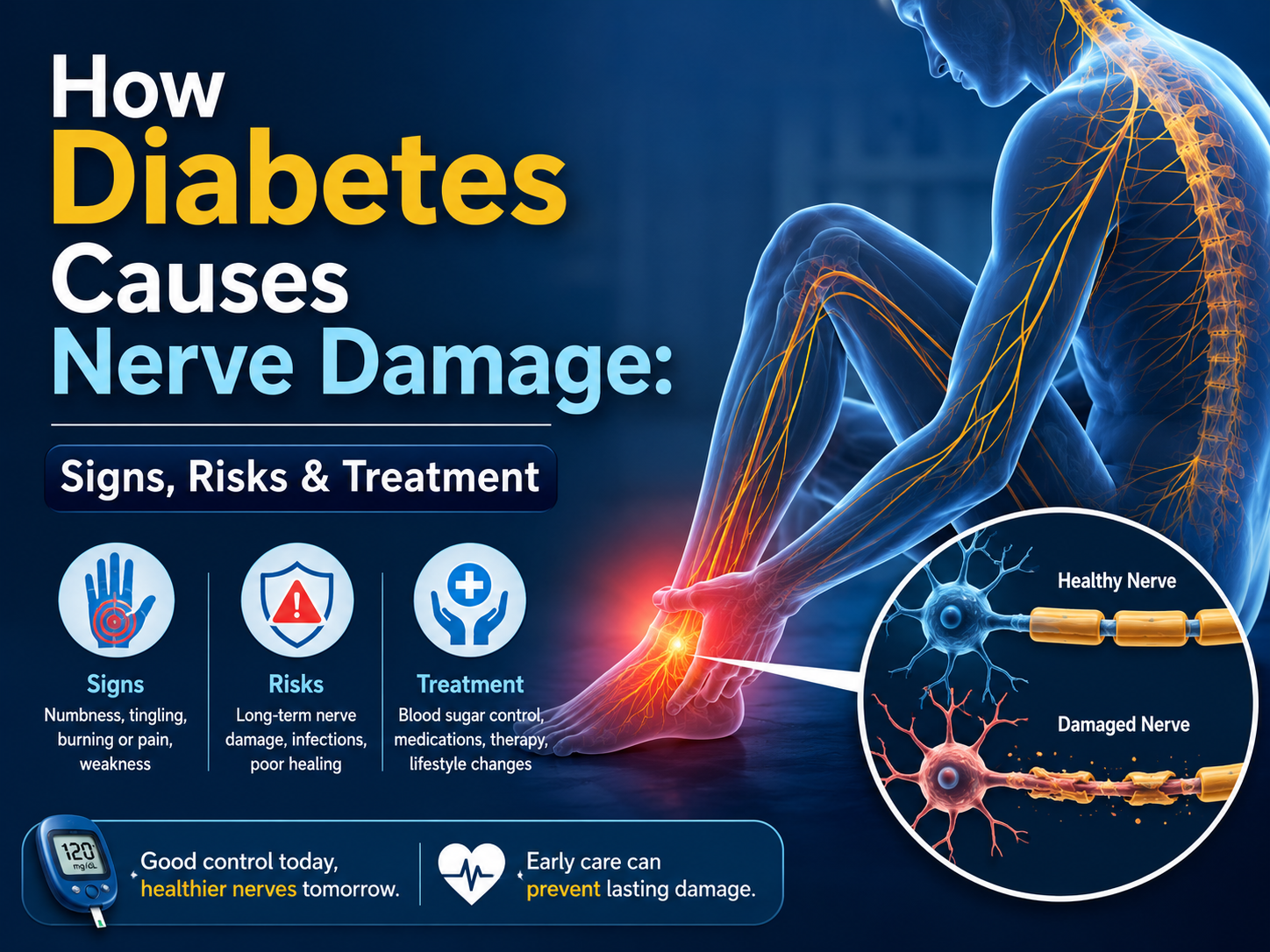
Diabetes can affect many parts of the body, but one of the most common and dangerous complications is Diabetic Neuropathy. This condition happens when high blood sugar damages the nerves over time. Nerve damage can affect the feet, legs, hands, digestive system, bladder, heart, and other organs.
Many people ignore early symptoms like tingling, numbness, or burning pain in the feet. But these warning signs should never be overlooked. If untreated, nerve damage can lead to serious problems such as foot ulcers, infections, balance issues, digestive problems, and even disability.
In India, diabetic neuropathy is becoming more common because diabetes rates are rising rapidly. Poor blood sugar control, delayed diagnosis, smoking, obesity, and unhealthy lifestyles increase the risk of nerve damage.
This complete guide explains the symptoms, causes, warning signs, diagnosis, treatment, prevention, and lifestyle tips for managing diabetic neuropathy and protecting nerve health.
What Is Diabetic Neuropathy?
Diabetic Neuropathy is nerve damage caused by diabetes. High blood sugar levels injure nerves and the small blood vessels that supply oxygen to the nerves.
Nerves help the body:
- Feel pain and temperature
- Control muscles
- Support digestion
- Manage heart rate
- Control bladder function
When nerves become damaged, these functions stop working properly.
How Diabetes Causes Nerve Damage
High blood sugar affects the body slowly over many years.
Damage to Blood Vessels
Diabetes damages tiny blood vessels that carry oxygen and nutrients to nerves. Without enough oxygen, nerves become weak.
Inflammation
Long-term high sugar levels increase inflammation in the body. This harms nerve tissues.
Metabolic Changes
Diabetes changes how nerves process signals, leading to pain, numbness, or weakness.
Types of Diabetic Neuropathy
There are different types of diabetic neuropathy depending on which nerves are affected.
Peripheral Neuropathy
This is the most common type.
It usually affects:
- Feet
- Toes
- Legs
- Hands
Symptoms
- Tingling sensation
- Burning feet
- Sharp pain
- Numbness
- Muscle weakness
- Loss of balance
- Increased sensitivity to touch
Symptoms often become worse at night.
Autonomic Neuropathy
This affects nerves controlling automatic body functions.
Symptoms
- Digestive problems
- Constipation
- Diarrhea
- Dizziness
- Excess sweating
- Low blood pressure
- Bladder issues
- Sexual dysfunction
Autonomic neuropathy can also affect heart function.
Proximal Neuropathy
This type affects nerves in the hips, thighs, or buttocks.
Symptoms
- Severe thigh pain
- Weak legs
- Difficulty standing
- Weight loss
It usually affects one side of the body.
Focal Neuropathy
This affects a single nerve suddenly.
Symptoms
- Eye pain
- Facial weakness
- Double vision
- Hand weakness
- Chest pain
Focal neuropathy may improve over time with treatment.
Early Warning Signs of Nerve Damage
Recognizing symptoms early can help prevent complications.
Common Early Symptoms
- Tingling in feet
- Burning sensation
- Numbness
- Foot pain
- Pins and needles feeling
- Reduced sensation
- Muscle cramps
- Sensitivity to touch
Some people may feel like they are wearing socks even when barefoot.
Advanced Symptoms of Diabetic Neuropathy
As nerve damage worsens, symptoms become more severe.
Advanced Signs
- Loss of coordination
- Foot ulcers
- Infections
- Difficulty walking
- Muscle wasting
- Loss of reflexes
- Severe pain
- Balance problems
Symptoms That Need Immediate Medical Attention
Seek urgent medical care if you notice:
- Foot wounds
- Skin turning black
- Severe infection
- Sudden weakness
- Chest pain
- Fainting
- Difficulty breathing
These symptoms may indicate serious complications.
Risk Factors for Diabetic Neuropathy
Not everyone with diabetes develops nerve damage, but some factors increase risk.
Major Risk Factors
- Poor blood sugar control
- Long-term diabetes
- Smoking
- Obesity
- High cholesterol
- High blood pressure
- Kidney disease
- Alcohol use
- Lack of physical activity
The longer diabetes remains uncontrolled, the higher the risk.
How Diabetic Neuropathy Is Diagnosed
Doctors use several methods to diagnose nerve damage.
Physical Examination
The doctor checks:
- Muscle strength
- Reflexes
- Skin condition
- Foot health
- Balance
Sensory Tests
Doctors test:
- Temperature sensation
- Vibration
- Touch sensitivity
A monofilament test is commonly used.
Nerve Conduction Studies
These tests measure how fast nerves send signals.
Blood Tests
Doctors may check:
- Blood sugar levels
- Vitamin deficiencies
- Kidney function
Treatment for Diabetic Neuropathy
Treatment focuses on slowing nerve damage, relieving symptoms, and preventing complications.
Blood Sugar Control
Controlling diabetes is the most important treatment step.
Methods Include
- Diabetes medicines
- Insulin
- Healthy eating
- Regular exercise
- Blood sugar monitoring
Stable sugar levels may slow nerve damage progression.
Medicines for Nerve Pain
Doctors may prescribe medicines to reduce nerve pain.
Common Medicines
- Pain relievers
- Anti-seizure medicines
- Antidepressants
Medicine dosage depends on individual health needs.
Do not self-medicate.
Physical Therapy
Physical therapy helps improve:
- Strength
- Balance
- Mobility
Exercises can also reduce fall risk.
Foot Care for Diabetic Neuropathy
People with neuropathy should inspect their feet daily.
Important Foot Care Tips
- Wash feet daily
- Dry properly
- Moisturize dry skin
- Wear soft footwear
- Avoid barefoot walking
- Check for cuts or blisters
Even small injuries can become dangerous.
Lifestyle Changes That Help Nerve Health
Healthy habits can support nerve function and diabetes control.
Eat a Healthy Diet
Focus on:
- Vegetables
- Whole grains
- Lean protein
- Nuts
- Healthy fats
Limit:
- Sugar
- Processed food
- Fried food
Exercise Regularly
Exercise improves:
- Blood circulation
- Blood sugar levels
- Nerve health
Walking, yoga, and stretching are often helpful.
Stop Smoking
Smoking reduces blood flow and worsens nerve damage.
Limit Alcohol
Alcohol can increase nerve injury and worsen symptoms.
Complications of Untreated Diabetic Neuropathy
Ignoring symptoms can lead to serious health issues.
Possible Complications
- Foot ulcers
- Gangrene
- Infections
- Falls
- Amputation
- Digestive disorders
- Bladder dysfunction
- Sexual health problems
Early treatment lowers complication risk.
Can Diabetic Neuropathy Be Reversed?
Nerve damage may not fully reverse, especially in advanced stages. However:
- Symptoms can improve
- Pain can be controlled
- Further damage can be slowed
Early diagnosis offers the best outcomes.
Preventing Diabetic Neuropathy
Prevention is the best strategy.
Prevention Tips
- Keep blood sugar under control
- Exercise regularly
- Avoid smoking
- Maintain healthy weight
- Get regular checkups
- Follow foot care routine
- Eat balanced meals
Best Foods for Nerve Health
Some nutrients help support nerve function.
Helpful Nutrients
- Vitamin B12
- Omega-3 fatty acids
- Magnesium
- Antioxidants
Good Food Sources
- Fish
- Eggs
- Nuts
- Green vegetables
- Seeds
- Whole grains
Consult a doctor before taking supplements.
Living With Diabetic Neuropathy
Managing nerve damage requires long-term care.
Daily Tips
- Monitor blood sugar
- Wear comfortable footwear
- Stay active
- Follow medication schedule
- Protect feet from injury
- Attend regular doctor visits
Support from family and healthcare professionals also helps improve quality of life.
When to See a Doctor
Consult a doctor if you experience:
- Numbness
- Burning feet
- Foot pain
- Balance problems
- Foot wounds
- Digestive issues
- Muscle weakness
Do not wait for symptoms to become severe.
Conclusion
Diabetic Neuropathy is one of the most common complications of diabetes, but early awareness and proper care can make a major difference. Tingling, numbness, burning pain, or foot problems should never be ignored.
Controlling blood sugar, following healthy habits, regular exercise, and proper foot care can help slow nerve damage and reduce complications. Early diagnosis and treatment improve quality of life and help prevent serious conditions like ulcers, infections, and amputations.
Taking diabetes seriously today can protect your nerves and overall health in the future.






Comments (0)
No comments yet. Be the first to share your thoughts!
Leave a Comment