
Introduction
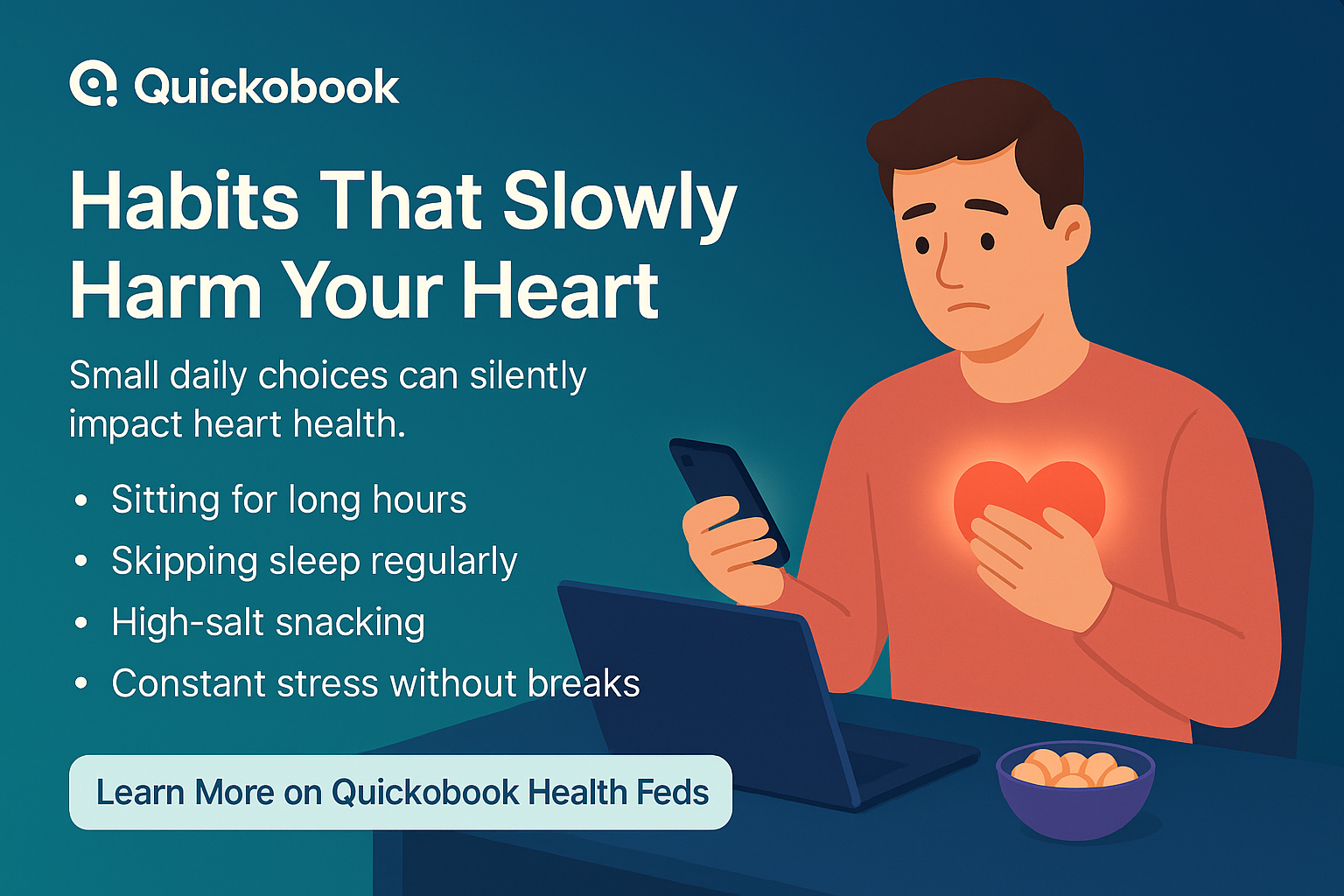
Your heart works nonstop, pumping blood and oxygen to every part of your body. But many everyday habits—often ignored—slowly weaken heart health over time. These habits do not cause sudden problems, but they quietly raise the risk of high blood pressure, cholesterol imbalance, diabetes, heart disease, and heart attack.
This blog explains the most common daily habits that harm your heart, their long-term effects, simple lifestyle changes, when to see a doctor, and how to protect your heart using healthy lifestyle choices. The information is easy to understand and designed for Indian families.
Understanding Heart Health
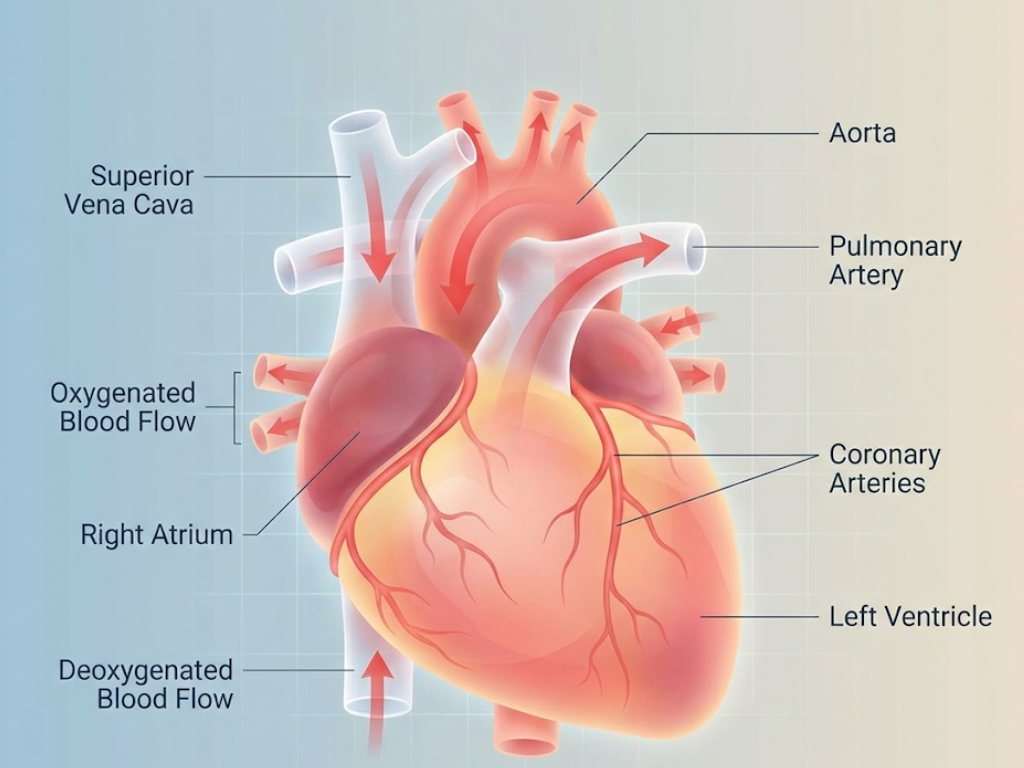
Heart health means how well your heart and blood vessels work together. A healthy heart pumps blood smoothly, keeps oxygen flowing, controls blood pressure, and supports overall body function. When lifestyle choices strain the heart, it becomes harder for it to maintain normal function. Over time, this can lead to heart disease.
Everyday Habits That Harm Your Heart
Sitting for Long Hours
Sitting for more than 6–8 hours a day reduces blood flow, weakens muscles, increases weight, and raises blood pressure.
Eating Too Much Salt
Common in Indian pickles, papads, packaged snacks. Extra salt increases water retention and blood pressure.
Poor Sleep Routine
Sleeping less than 6 hours or more than 9 hours stresses the heart, causing weight gain and metabolic changes.
High Sugar Consumption
Sugary foods and drinks raise blood sugar and triglycerides.
Smoking and Second-hand Smoke
Reduces oxygen flow, damages arteries, and increases heart attack risk.
High Stress Levels
Stress hormones raise blood pressure and inflammation.
Alcohol Consumption
Weakens heart muscles and increases fat levels.
Skipping Regular Exercise
Lack of movement slows metabolism and increases risk factors.
Overeating and Fast Eating
Large portions strain the heart and digestion.
Ignoring Early Symptoms
Fatigue, chest pressure, and swelling are often ignored until severe.
Causes Behind These Harmful Habits
-
Busy work culture
-
Lack of awareness
-
Sedentary lifestyles
-
Processed food choices
-
Inadequate sleep
-
Limited time for exercise
Common Symptoms of Poor Heart Health
-
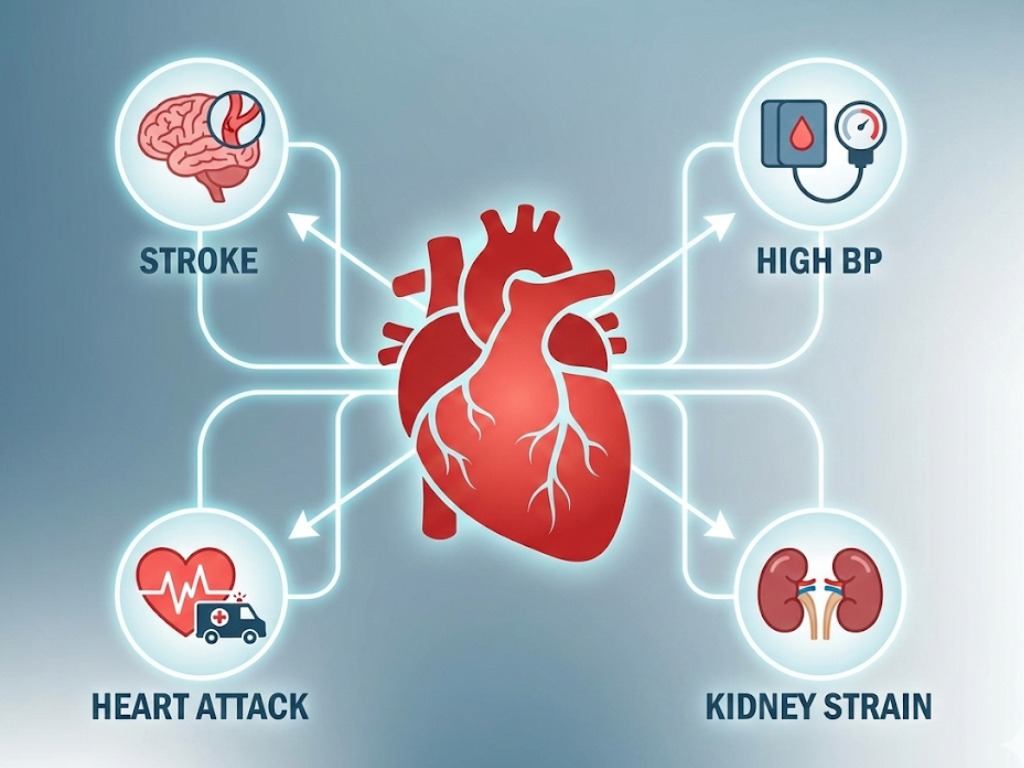
Chest pain
-
Breathlessness
-
Irregular heartbeat
-
Swelling in legs
-
Fatigue
-
Dizziness
ALSO READ: Social Media Addiction: Impact On Teen Mental Health
Diagnosis: How Doctors Check Heart Health
Common Tests
-
ECG
-
Echo
-
Lipid profile
-
Blood sugar
-
BP monitoring
-
TMT
-
CT angiography
Treatment Options
Medical Care
-
Medicines for BP, sugar, cholesterol
-
Lifestyle correction
-
Cardiac rehabilitation
Advanced Care
-
Angioplasty
-
Bypass surgery
Healthy Lifestyle Habits to Protect Your Heart
Move Every 30 Minutes
Avoid long sitting hours.
Eat Heart-friendly Foods
Fruits, vegetables, whole grains, nuts, lean protein.
Limit Salt and Sugar
Choose home-cooked meals.
Sleep 7–8 Hours
Maintain routine sleeping habits.
Quit Smoking
Only complete quitting protects the heart.
Manage Stress
Practice breathing exercises and yoga.
Limit Alcohol
Small amounts or complete avoidance.
Maintain Healthy Weight
Balanced plate eating.
Prevention Tips for Strong Heart Health
-
Annual check-ups
-
Monitor BP
-
Walk daily
-
Reduce fried food
-
Stay hydrated
-
Choose stairs
When to See a Doctor
Seek medical help if you experience:
-
Chest pain
-
Breathlessness
-
Palpitations
-
Swelling in feet
-
Extreme tiredness
-
High BP not improving
Risks and Complications of Poor Heart Health
-
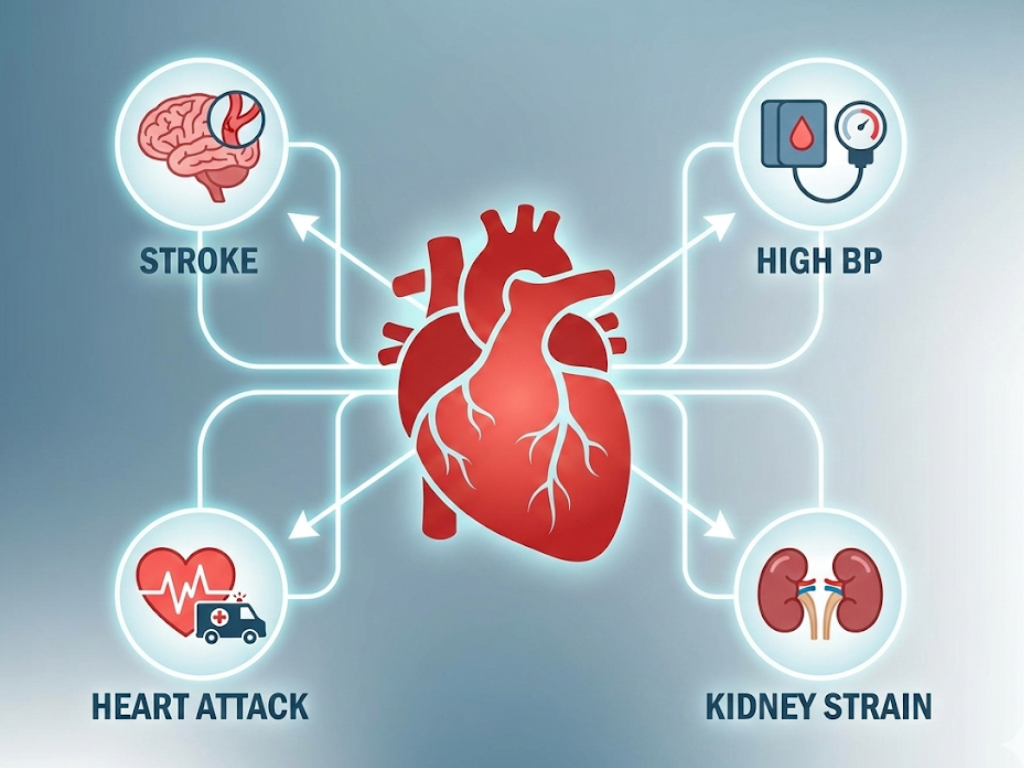
Hypertension
-
High cholesterol
-
Stroke
-
Heart attack
-
Heart failure
-
Kidney damage
50 FAQs
-
What habits harm heart health?
Sitting too long, excess salt, sugar, smoking, stress, no exercise. -
Can sleep affect heart health?
Yes, poor sleep increases BP and weight. -
How much exercise is needed daily?
At least 30 minutes. -
Does stress damage the heart?
Yes, long-term stress strains arteries. -
How much salt is safe?
Less than 5 grams daily. -
Is sugar harmful?
Yes, too much sugar increases fat. -
Does smoking affect heart health?
Yes, even one cigarette reduces oxygen. -
Is second-hand smoke harmful?
Yes, it affects children and adults. -
Does alcohol weaken the heart?
Yes, heavy intake damages muscles. -
What diet helps heart health?
Fresh fruits, vegetables, whole grains. -
Can lack of exercise cause disease?
Yes, it increases risks. -
Are Indian foods harmful?
Fried, salty, sugary foods are harmful. -
Does obesity affect the heart?
Yes, it increases strain. -
What are early warning signs?
Chest pain, fatigue, breathlessness. -
Can diabetes damage the heart?
Yes, high sugar harms blood vessels. -
Do women have different symptoms?
Fatigue and nausea may appear instead of strong chest pain. -
What does high BP do?
It stiffens arteries. -
Can young people get heart disease?
Yes, unhealthy habits affect all ages. -
Is fast eating harmful?
Yes, it stresses digestion. -
Are energy drinks harmful?
Yes, they raise heart rate. -
How does dehydration affect the heart?
It thickens blood. -
Can walking replace gym workouts?
Yes, daily walking is effective. -
Are stairs good exercise?
Yes, stairs improve stamina. -
How often to check BP?
Monthly or as advised. -
Is stress eating harmful?
Yes, it raises cholesterol. -
Is coffee harmful?
Moderate intake is fine. -
Does red meat affect the heart?
Excess raises cholesterol. -
Is skipping breakfast harmful?
Yes, it harms metabolism. -
Best oils for heart?
Mustard, olive, groundnut oil. -
Does family history matter?
Yes, genetics increases risk. -
Can meditation help?
Yes, it reduces stress. -
Is swimming helpful?
Yes, it strengthens heart. -
Are processed foods harmful?
Yes, high in salt and sugar. -
Can heart disease be reversed?
Some damage improves with lifestyle changes. -
What tests check heart health?
ECG, echo, cholesterol tests. -
Is chest pain always serious?
Not always, but must be checked. -
Can gas pain mimic heart pain?
Sometimes, only a doctor can confirm. -
Does lack of sleep harm the heart?
Yes, it causes imbalances. -
Can yoga help?
Yes, it reduces stress. -
Are heart attacks sudden?
Often build over time. -
Does ageing weaken the heart?
Yes, but lifestyle slows it. -
Does water help the heart?
Yes, improves blood flow. -
Is spicy food harmful?
Not directly unless digestion is affected. -
Is ghee safe?
Small amounts are fine. -
Does pollution affect the heart?
Yes, increases stress on lungs and heart. -
Can stress trigger attack?
Severe stress can trigger events. -
Are fruits necessary?
Yes, they give fibre and antioxidants. -
Is belly fat harmful?
Yes, linked to heart disease. -
How to start a healthy lifestyle?
Begin with walking and salt control. -
How often for heart check-ups?
Once a year after 30.
Conclusion
Your heart depends on your daily choices. By improving habits like activity, diet, sleep, and stress control, you can protect your heart and live healthier.
Quickobook CTA
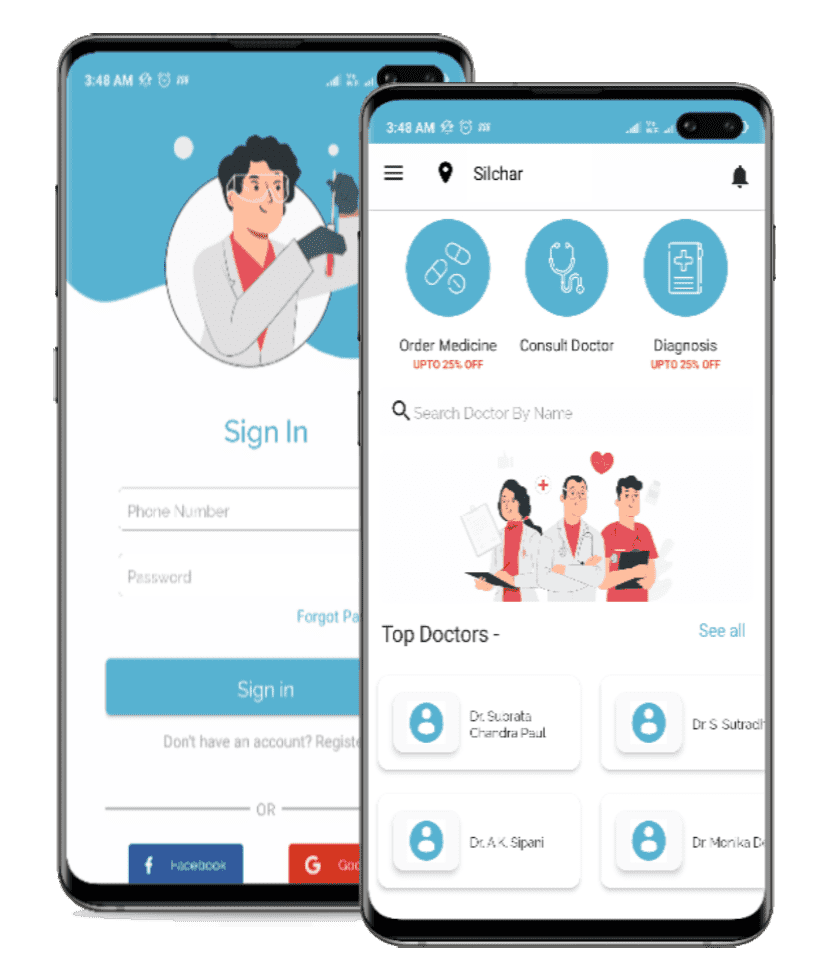
Book a cardiologist or physician on Quickobook for check-ups, lifestyle advice, and early screening.
Disclaimer
This information is educational. Always consult a doctor for personalised advice



Comments (0)
No comments yet. Be the first to share your thoughts!
Leave a Comment