
Introduction: Why Sexual Health Matters in India
Sexual health is an important part of overall well-being. In India, many people still feel shy talking about sex, protection, or HIV. This silence often leads to fear, confusion, and unsafe decisions. Safe sex is not only about preventing pregnancy — it also protects you from HIV and other sexually transmitted infections (STIs).
HIV (Human Immunodeficiency Virus) affects the immune system, making the body weaker over time. Learning safe sex practices, recognizing early HIV symptoms, and getting tested regularly can help protect you and your partner. This blog explains everything in clear, easy language so you can make safe, confident choices.
What Is HIV? Understanding the Basics
HIV is a virus that attacks the immune system. If not treated, it can progress to AIDS. However, with early diagnosis and treatment, people living with HIV can live long, healthy lives.
HIV spreads mainly through:
- Unprotected sex
- Sharing needles
- Blood transfusion with infected blood
- From mother to child during birth or breastfeeding
The good news is that HIV is completely preventable with the right precautions.
Section 1: Why Safe Sex Is Important for Sexual Health
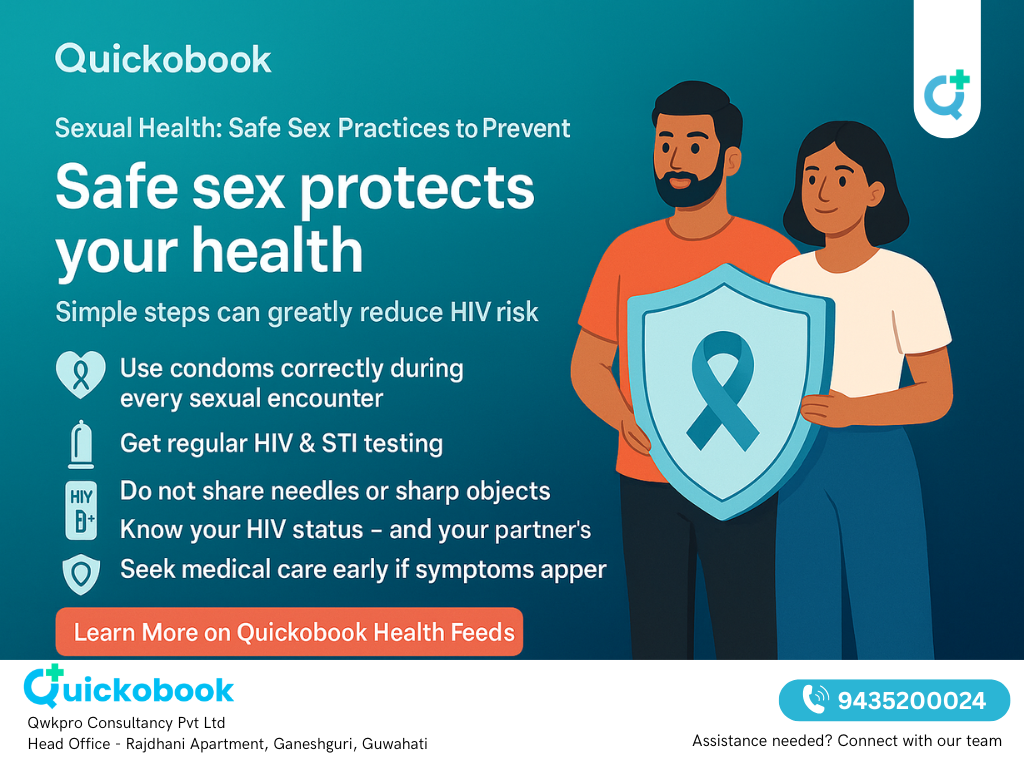
Safe sex protects your body, your mind, and your relationships. Practicing safe sex helps you:
- Avoid HIV
- Prevent unintended pregnancies
- Reduce STIs like syphilis, herpes, gonorrhoea, and chlamydia
- Build trust and open communication with your partner
- Improve overall sexual well-being
Safe sex is not only about condoms — it includes awareness, consent, honesty, testing, and healthy habits.
Section 2: Early HIV Symptoms Everyone Should Know
Understanding HIV symptoms helps in early detection and treatment. But remember — many people do not show symptoms for years.
Early HIV symptoms may include:
- Fever
- Tiredness
- Body aches
- Sore throat
- Skin rash
- Swollen lymph nodes
These symptoms look like normal viral infections, which is why testing is important, especially if you had unprotected sex.
Long-term untreated HIV symptoms:
- Weight loss
- Long-lasting fever
- Recurrent infections
- Night sweats
If you notice these symptoms, see a doctor for an HIV test.
Section 3: Safe Sex Practices to Prevent HIV in India
1. Always Use Condoms (Male or Female)
Condoms are the simplest and most effective way to prevent HIV. They act as a barrier and stop the virus from entering your body.
Tips for proper condom use:
- Check the expiry date
- Open gently (avoid tearing)
- Squeeze the tip
- Roll down to the base
- Use water-based lubricants (not oil-based)
- Dispose safely after use
Using a condom correctly every time reduces HIV risk greatly.
READ ALSO: Prostate Cancer Test Can Save Life: Why Seeing A Urologist Early Matters For Cancer Prevention
2. Limit Your Number of Sexual Partners
Having multiple partners increases your chances of meeting someone who may have HIV or another STI. Staying in a mutually monogamous relationship — where both partners test negative — reduces risk.
3. Know Your Partner’s Sexual Health Status
Many people hesitate to discuss sexual history. But being open helps both partners stay safe. Ask about:
- Recent HIV test
- STI screening
- Condom use
- High-risk activities
Honest conversations strengthen trust and protect health.
4. Get Tested for HIV and STIs Regularly
Testing is the most reliable way to know your status. In India, HIV tests are available at:
- Government hospitals
- ICTC centers
- Private labs
- Community health centers
If you have multiple partners or had unprotected sex, get tested every 3–6 months.
5. Use Pre-Exposure Prophylaxis (PrEP)
PrEP is a daily pill for people at high risk of HIV. When taken correctly, it reduces HIV risk by more than 90%.
PrEP may benefit:
- People with HIV-positive partners
- Individuals with multiple partners
- Sex workers
- LGBTQ+ individuals, especially MSM
- People who frequently have unprotected sex
Always take PrEP only after a doctor’s advice.
6. Use Post-Exposure Prophylaxis (PEP)
PEP is a 28-day treatment that must be taken within 72 hours after possible HIV exposure, such as:
- Condom break
- Unprotected sex
- Sexual assault
The sooner you start PEP, the better.
7. Avoid Sharing Needles or Sharp Instruments
Never share:
- Needles
- Syringes
- Razors
- Tattoo equipment
HIV can spread through small amounts of blood on these items.
8. Choose Safe Menstrual and Reproductive Practices
Sharing menstrual cups, tampons, or blood-contaminated items can increase infection risk. Always maintain hygiene.
9. Stay Away from Alcohol- or Drug-Induced Risky Situations
Alcohol and drugs reduce judgment. Many people forget condoms or engage in risky sex when intoxicated. Stay alert and aware.
10. Prioritize Communication and Consent
Healthy sexual health includes:
- Mutual consent
- Respect
- Honest conversations
- Understanding boundaries
Good communication often leads to better, safer decisions.
Section 4: Hygiene and Safe Sexual Health Habits
Good sexual health requires good hygiene too:
- Wash hands before and after sex
- Clean genitals gently (avoid harsh chemicals)
- Do not douche — it increases infection risk
- Change condoms if switching from anal to vaginal sex
- Seek check-ups if you notice itching, odor, pain, or sores
These small habits can prevent big problems.
Section 5: When Should You See a Doctor?
Seek medical help if you notice:
- HIV symptoms such as fever, rash, or swollen glands
- Pain while urinating
- Abnormal discharge
- Genital sores or ulcers
- Burning, itching, or pain in private parts
- Unprotected sex in the last 72 hours (PEP may be required)
Early evaluation can prevent serious complications.
Section 6: Common Myths About HIV and Safe Sex in India
Myth: You can get HIV through casual touch
Fact: HIV does not spread through touch, hugging, sharing food, or toilets.
Myth: Condoms always break
Fact: Condoms are safe if used correctly.
Myth: Only “promiscuous” people get HIV
Fact: HIV can affect anyone.
Myth: Traditional remedies can cure HIV
Fact: Only medical treatment helps control HIV.
Myth: Testing is only for people with symptoms
Fact: Many have no symptoms for years.
Conclusion: Sexual Health Is a Lifelong Responsibility
Sexual health is not just about one decision — it’s about building habits that keep you safe for life. HIV is preventable when you use protection, stay honest with partners, get tested, and practice safe sex. Remember, early detection of HIV symptoms and timely testing can save lives.
Taking care of your sexual health shows respect for yourself and your partner. Stay informed, stay aware, and stay protected.
Quickobook CTAs
- Book a General Physician consultation on Quickobook for HIV testing or sexual health advice.
- Find nearby Infectious Disease Specialists on Quickobook.
- Get confidential online doctor consultations for safe sex guidance.
- Stay healthy. Stay informed. Choose Quickobook.
Disclaimer
This blog is for educational purposes only. It does not replace medical advice. Consult a doctor for diagnosis, treatment, or any symptoms. Medicines should be taken only as advised by a healthcare professional.
50 FAQs
- What is safe sex?
Safe sex means using protection like condoms and following healthy practices to avoid HIV, STIs, and unintended pregnancy. - Can condoms prevent HIV?
Yes, condoms are highly effective when used correctly every time. - What are early HIV symptoms?
Early HIV symptoms may include fever, tiredness, rash, and sore throat. - Can HIV spread through kissing?
No, HIV does not spread through casual or closed-mouth kissing. - Is HIV curable?
No, but it can be controlled with lifelong medicine. - How often should I get an HIV test?
Every 3–6 months if you have multiple partners or had unprotected sex. - What is PrEP?
PrEP is a daily pill that lowers HIV risk for high-risk people. - Can I get HIV from oral sex?
The risk is low but still possible. - What should I do if a condom breaks?
See a doctor immediately — you may need PEP within 72 hours. - Can HIV spread through mosquito bites?
No, mosquitoes cannot spread HIV. - Is HIV spread by sharing food?
No, sharing food is safe. - Can touching blood spread HIV?
Yes, if the infected blood enters your bloodstream. - Is HIV testing painful?
No, it’s a simple blood test. - Can HIV spread during menstruation?
Yes, blood contact can increase risk. - What is PEP?
PEP is a 28-day medicine to prevent HIV after possible exposure. - Can two HIV-negative partners have sex without condoms?
Yes, if both are monogamous and tested recently. - Does alcohol increase HIV risk?
Yes, it reduces judgment and increases unsafe sex. - Can HIV spread through sweat?
No, sweat does not carry HIV. - Can condoms expire?
Yes, always check the date before use. - How does HIV weaken the body?
It attacks immune cells, making it harder to fight infections. - Is oral sex safe without condoms?
Not completely — infections can still spread. - Can HIV symptoms appear years later?
Yes, some people show no symptoms for a long time. - Can shaving cause HIV?
Only if contaminated blades are shared. - Does HIV spread through toilets?
No, toilets are safe. - Can men and women both get HIV?
Yes, anyone can get HIV. - Is HIV testing free in India?
Yes, government centers provide free testing. - What is an STI?
An STI is a sexually transmitted infection. - Can HIV spread during anal sex?
Yes, it has a higher risk than vaginal sex. - Can condoms protect against all STIs?
They protect against most, but not all skin-to-skin infections. - Should I get tested after unprotected sex?
Yes, testing is important even without symptoms. - Can HIV be transmitted through breast milk?
Yes, from mother to baby. - Is HIV medicine expensive in India?
Government programs provide free or affordable treatment. - What is viral load?
It is the amount of HIV in the blood. - Does low viral load mean no risk?
Risk is lower, but not zero. - Can I get HIV from sharing towels?
No, towels do not spread HIV. - Can HIV cause weight loss?
Yes, untreated HIV may cause weight loss. - Is latex allergy common?
Some people have it; non-latex condoms are available. - Can HIV spread through saliva?
No, saliva does not transmit HIV. - Is it safe to reuse condoms?
No, condoms must be used once only. - Can HIV spread from kissing with wounds?
Risk is extremely low but possible if blood is present. - What age should someone get tested?
Anyone sexually active should consider testing. - Does HIV spread through tears?
No, tears do not carry HIV. - Can birth control pills prevent HIV?
No, they only prevent pregnancy. - Is HIV always fatal?
No, with treatment people live long lives. - Can tattoos spread HIV?
Only if needles are not sterilized. - Can HIV spread through shared needles?
Yes, sharing needles is very risky. - Can HIV affect pregnancy?
Yes, but treatment reduces baby’s risk greatly. - Is abstinence the only safe method?
It is one method, but condoms and PrEP also protect well. - What should I do if I notice HIV symptoms?
See a doctor for testing immediately. - Can healthy people carry HIV without knowing?
Yes, many people have no symptoms for years.


Comments (0)
No comments yet. Be the first to share your thoughts!
Leave a Comment