






2026
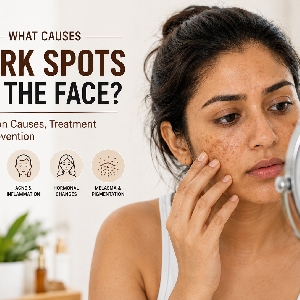
What Causes Dark Spots On The Face? Common Causes, Treatment And Prevention
Dark spots on the face are extremely common and can appear at almost any age. You may notice a few brown marks after acne heals, patches that become darker after spending time outdoors, or areas of uneven pigmentation that seem to appear without an obvious reason. So, what causes dark spots on the face? In most cases, dark spots develop when certain areas of the skin produce more melanin than usual. Melanin is the natural pigment responsible for the colour of your skin, hair and eyes. Sun exposure, acne, hormonal changes, skin inflammation and certain medical conditions can all affect melanin production. Although many facial dark spots are harmless, identifying their cause is important because different types of pigmentation require different approaches to treatment. What Are Dark Spots on the Face? Dark spots are areas of skin that appear darker than the surrounding skin. The medical term often used for increased pigmentation is hyperpigmentation. Depending on the cause and your natural skin tone, these areas may appear: Light brown Dark brown Greyish Black Reddish-brown Blue-grey Dark spots can occur anywhere on the body, but they are particularly noticeable on the face because the face receives frequent sun exposure. Hyperpigmentation itself is not a single disease. Instead, it describes a change in skin colour that can result from several different conditions. What Causes Dark Spots on the Face? There isn't one single cause. The appearance, location and history of the pigmentation can provide important clues. Here are some of the most common causes. 1. Sun Exposure Frequent exposure to sunlight is one of the major causes of facial pigmentation. Ultraviolet (UV) radiation stimulates the skin to produce more melanin as a protective response. Over time, repeated sun exposure can result in areas of concentrated pigmentation commonly called sunspots, age spots or solar lentigines. They frequently develop on areas that receive regular sunlight, including the: Face Forehead Cheeks Nose Hands Shoulders Although they are often associated with ageing, cumulative sun exposure is an important reason they become more common as people get older. Using appropriate sun protection is therefore important not only for preventing sunburn but also for reducing the worsening of pigmentation. 2. Dark Spots After Acne Have you ever had a pimple disappear only to leave a dark mark behind? This is very common. The condition is known as post-inflammatory hyperpigmentation, or PIH. When acne causes inflammation, the skin may respond by producing additional pigment. Even after the acne itself has healed, the pigment can remain. These marks may appear brown, dark brown, greyish or reddish depending on your skin tone and the depth of pigmentation. People with darker skin tones can be particularly prone to noticeable post-inflammatory pigmentation. One important distinction is that these marks are not necessarily acne scars. A flat dark mark represents a change in pigmentation, whereas an acne scar usually involves a change in the texture of the skin. Picking or squeezing pimples can increase inflammation and may make post-acne marks worse. 3. Melasma Melasma is another common cause of facial pigmentation. It usually produces symmetrical brown or grey-brown patches, particularly on areas such as the: Cheeks Forehead Upper lip Nose Chin Melasma is more common in women, although men can develop it too. Several factors may contribute to melasma, including hormonal changes and sun exposure. Pregnancy is a well-known trigger, which is why melasma is sometimes referred to as the "mask of pregnancy." Hormonal medications may also play a role in some individuals. Sunlight can make existing melasma darker, which makes sun protection an important part of managing the condition. 4. Hormonal Changes Hormones can influence melanin production and contribute to changes in skin pigmentation. Pregnancy is one example. Some people notice darker areas on the face during pregnancy due to hormonal changes. Hormonal factors are also strongly associated with melasma. However, developing pigmentation does not automatically mean that you have a hormonal disorder. If dark spots appear together with other symptoms such as irregular menstrual cycles, unusual hair growth or other hormonal changes, a doctor may recommend further evaluation. 5. Skin Irritation and Inflammation Acne isn't the only inflammatory skin problem that can leave dark marks. Hyperpigmentation may develop after various forms of skin inflammation or injury. Examples include: Eczema Allergic reactions Skin infections Burns Cuts Insect bites Rashes Irritation caused by cosmetic products Once the inflammation settles, pigmentation may remain for weeks or months. The more irritated the skin becomes, the greater the possibility of persistent pigmentation in susceptible individuals. This is one reason aggressive home remedies for dark spots can sometimes make the problem worse rather than better. 6. Certain Medicines Some medications can cause or contribute to changes in skin pigmentation. Drug-induced pigmentation can vary significantly in appearance and location depending on the medicine involved. If you develop new or unexplained pigmentation after starting a medication, speak with your doctor. Do not stop prescribed medication on your own simply because you suspect it may be affecting your skin. Your doctor can evaluate whether the medication is likely to be responsible and discuss alternatives when appropriate. 7. Age-Related Pigmentation Dark spots often become more noticeable with age. This doesn't necessarily mean ageing itself is the only cause. Years of accumulated sun exposure can gradually lead to the development of solar lentigines, commonly known as age spots. They tend to occur on sun-exposed areas and may become increasingly noticeable over time. Because different skin conditions can sometimes resemble age spots, a new or changing pigmented spot should not automatically be assumed to be harmless. Why Are Dark Spots More Common on the Face? Your face is exposed to sunlight almost every day. Even when you aren't deliberately spending time in the sun, your skin can receive UV exposure while travelling, walking outdoors or sitting near certain windows. The face is also frequently affected by acne, skincare products, cosmetics and irritation. These factors make facial skin particularly susceptible to pigmentation. Can Dark Spots Go Away on Their Own? Some can. Post-inflammatory hyperpigmentation, particularly after acne or mild skin irritation, may gradually fade as the skin naturally renews itself. But this process can take time. Depending on the type and depth of pigmentation, fading may take several months or sometimes longer. Other types of pigmentation, such as melasma or sun-related spots, may persist or return even after treatment. The underlying cause makes a major difference. How Are Dark Spots on the Face Treated? Treatment depends on what is causing the pigmentation. There is no single cream or procedure that is ideal for every type of dark spot. A dermatologist may recommend one or a combination of approaches depending on your skin type, diagnosis and severity. Sunscreen and Sun Protection Sun protection is one of the most important steps in managing many forms of hyperpigmentation. Without adequate sun protection, existing spots may become darker and new pigmentation may develop. A dermatologist can help you choose sunscreen appropriate for your skin type, particularly if you also have acne-prone or sensitive skin. Other protective measures include wearing a hat, seeking shade during strong sunlight and avoiding unnecessary prolonged sun exposure. Topical Treatments Depending on the cause, dermatologists may recommend topical ingredients that reduce pigmentation or increase skin-cell turnover. These may include ingredients such as: Azelaic acid Retinoids Vitamin C Kojic acid Hydroquinone in selected cases Other pigment-reducing preparations Not every ingredient is suitable for every person. Some products can cause irritation, and irritation itself can worsen pigmentation, particularly in people prone to post-inflammatory hyperpigmentation. Prescription treatments should be used under appropriate medical guidance. Chemical Peels Chemical peels use specific chemical solutions to remove controlled layers of the skin. Certain types of superficial pigmentation may improve with professionally selected chemical peels. However, stronger isn't necessarily better. Using inappropriate concentrations or performing aggressive peels can cause burns, inflammation and additional pigmentation. Chemical peels should therefore be selected according to your skin type and condition. Laser and Light-Based Treatments Certain pigmentation problems may be treated using laser or light-based procedures. These treatments are not appropriate for every dark spot or every skin type. In some individuals, particularly those with darker skin tones, inappropriate laser treatment can potentially worsen pigmentation. A dermatologist should first determine what type of pigmentation you have before recommending a procedure. Treating the Underlying Acne If acne keeps producing new pimples, simply treating existing dark marks may not solve the problem. Every new inflammatory acne lesion has the potential to leave another mark. Controlling active acne can therefore be an important part of preventing new pigmentation. Avoid repeatedly squeezing or picking pimples, as this can increase inflammation and make post-acne marks more noticeable. Can Home Remedies Remove Dark Spots? The internet contains countless home remedies claiming to remove facial pigmentation quickly. Some involve lemon juice, baking soda, toothpaste or other harsh ingredients. These remedies should be approached cautiously. Lemon juice and other acidic substances can irritate the skin. Aggressive scrubbing may damage the skin barrier and increase inflammation. Rather than making pigmentation disappear, irritation may lead to more post-inflammatory hyperpigmentation. A gentle skincare routine and evidence-based treatment are generally safer than experimenting with harsh DIY remedies. How Can You Prevent Dark Spots? Not every form of pigmentation can be completely prevented, but several habits may reduce your risk or prevent existing spots from becoming darker. Protect Your Skin From the Sun Regular sun protection is one of the most important preventive measures. Use an appropriate broad-spectrum sunscreen and follow the product instructions regarding application and reapplication. Additional sun protection such as hats, umbrellas and shade can also help. Don't Pick Pimples It can be tempting to squeeze a pimple, particularly before an important event. However, squeezing increases inflammation and skin injury. Allow acne lesions to heal and seek treatment if you frequently experience breakouts. Be Gentle With Your Skin More skincare products do not necessarily produce better skin. Using multiple acids, scrubs, retinoids and active ingredients at the same time can irritate the skin barrier. Introduce new skincare products carefully and stop using products that cause significant burning, irritation or persistent redness. Treat Skin Conditions Early If eczema, acne or another inflammatory skin condition is repeatedly causing pigmentation, treating the underlying problem can help prevent additional dark marks. When Should You See a Dermatologist? Most dark spots are not medical emergencies, but some situations deserve professional evaluation. Consider consulting a dermatologist if: Dark spots are appearing rapidly Pigmentation continues to spread A spot changes colour, shape or size A spot develops irregular borders A pigmented area bleeds, crusts or repeatedly becomes irritated You have persistent acne with dark marks Pigmentation doesn't improve despite appropriate skincare You aren't sure what is causing the pigmentation Dark patches appear together with other unexplained symptoms A dermatologist can examine the pigmentation and determine whether it represents acne-related hyperpigmentation, melasma, sun damage or another skin condition. Frequently Asked Questions Why am I suddenly getting dark spots on my face? Sudden facial pigmentation can have several causes, including acne, sun exposure, skin irritation, hormonal changes or reactions to certain medications or skincare products. If pigmentation appears suddenly without an obvious explanation or continues spreading, consider consulting a dermatologist. Why do pimples leave dark marks? Inflammation from acne can stimulate excess melanin production. After the pimple heals, the excess pigment may remain, creating post-inflammatory hyperpigmentation. How long do acne dark spots take to fade? The timeline varies. Some superficial marks gradually fade over several months, while deeper or persistent pigmentation can take longer. Does sunscreen help with dark spots? Yes. Sun exposure can make many types of hyperpigmentation darker. Regular sun protection can help prevent existing pigmentation from worsening and reduce the development of additional sun-related spots. Can vitamin C remove dark spots? Topical vitamin C may help improve some forms of uneven pigmentation, but results vary and it may not be sufficient for every condition. Persistent pigmentation may require other treatments. Can dark spots be permanently removed? It depends on the cause. Some forms of pigmentation can improve significantly, while others, such as melasma, may recur. Ongoing sun protection and appropriate skincare may be needed to maintain results. Are dark spots a sign of a serious disease? Most facial dark spots are caused by common skin conditions and are not dangerous. However, a new pigmented lesion that changes in size, colour, shape or appearance should be evaluated by a medical professional. The Bottom Line Dark spots on the face usually develop because certain areas of the skin produce more pigment than the surrounding skin. Common causes include sun exposure, acne, melasma, hormonal changes, skin inflammation and irritation. The most important step is identifying why the pigmentation developed. Treating acne-related pigmentation is different from treating melasma or sun-related spots. Using the wrong products — particularly harsh home remedies — can irritate the skin and potentially make pigmentation worse. Sun protection, gentle skincare and appropriate treatment can improve many types of facial pigmentation. However, improvement often takes time. If your dark spots are persistent, spreading, changing in appearance or you are unsure about their cause, you can book an appointment with a dermatologist through Quickobook for appropriate evaluation and treatment guidance. Medical disclaimer: This article is intended for general educational purposes only and should not be considered a substitute for professional medical diagnosis, advice or treatment.
Read More


 Play Store