


 Cachar X-Ray Clinic

























2026
Monsoon Is Here — Watch Out For Dengue, Fever, And Waterborne Diseases
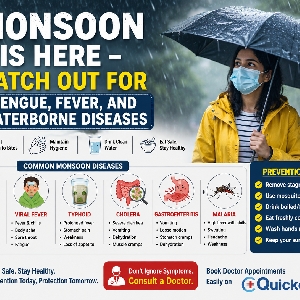
The monsoon season brings relief from the scorching summer heat, but it also increases the risk of several seasonal illnesses. Heavy rainfall, waterlogging, mosquito breeding, and contaminated drinking water create the perfect environment for infections like dengue, viral fever, malaria, typhoid, cholera, and stomach infections. Every year, thousands of people across India suffer from monsoon-related diseases due to poor sanitation, stagnant water, and delayed treatment. Understanding the symptoms, causes, prevention methods, and treatment options can help you and your family stay safe during the rainy season. If you notice symptoms like high fever, body pain, vomiting, diarrhea, weakness, or rashes, it is important to consult a doctor immediately. With Quickobook, patients can easily book doctor appointments online and access healthcare quickly during emergencies. Why Monsoon Increases the Risk of Diseases During monsoon, humidity rises and stagnant water accumulates in many places. This becomes an ideal breeding ground for mosquitoes and bacteria. At the same time, rainwater often contaminates food and drinking water sources, leading to infections and digestive illnesses. Common Reasons Behind Monsoon Diseases Stagnant water causing mosquito breeding Contaminated drinking water Poor hygiene and sanitation Increased humidity helping bacteria and viruses grow Eating uncovered street food Weak immunity during seasonal changes Children, elderly people, pregnant women, and people with chronic diseases are at higher risk during this season. Dengue During Monsoon What Is Dengue? Dengue fever is one of the most common monsoon diseases in India. It spreads through the bite of infected Aedes aegypti mosquitoes, which usually breed in clean stagnant water. Dengue cases typically rise rapidly during the rainy season due to water accumulation in coolers, flower pots, tyres, and containers. Symptoms of Dengue Fever Common Dengue Symptoms Include: Sudden high fever Severe headache Pain behind the eyes Muscle and joint pain Skin rashes Nausea and vomiting Extreme weakness and fatigue Low platelet count In severe cases, dengue can become life-threatening if not treated early. Warning Signs of Severe Dengue Seek urgent medical attention if you notice: Bleeding gums Blood in vomit or stool Severe abdominal pain Difficulty breathing Continuous vomiting Extreme weakness Early diagnosis and hydration are extremely important. Viral Fever During Monsoon What Is Viral Fever? Viral fever refers to fever caused by viral infections that become more common during seasonal changes. Monsoon humidity helps viruses spread faster, leading to frequent infections among adults and children. Symptoms of Viral Fever Fever and chills Sore throat Runny nose Body pain Headache Weakness Cough Most viral fevers improve within a few days with rest, hydration, and medicines prescribed by doctors. Waterborne Diseases During Rainy Season Monsoon often contaminates drinking water sources, leading to dangerous waterborne infections. Common Waterborne Diseases in Monsoon 1. Typhoid Typhoid spreads through contaminated food and water. Symptoms of Typhoid Prolonged fever Weakness Stomach pain Constipation or diarrhea Loss of appetite 2. Cholera Cholera causes severe dehydration and diarrhea. Cholera Symptoms Loose watery stools Vomiting Rapid dehydration Muscle cramps Immediate medical treatment is necessary. 3. Gastroenteritis Gastroenteritis becomes very common during monsoon. Symptoms Include Vomiting Loose motion Stomach cramps Fever Dehydration Malaria During Monsoon What Is Malaria? Malaria spreads through infected Anopheles mosquitoes. Symptoms of Malaria High fever with chills Sweating Headache Vomiting Weakness Malaria can become serious if ignored for too long. How to Prevent Dengue, Fever, and Waterborne Diseases Prevention is the best protection during the monsoon season. Tips to Prevent Dengue and Mosquito-Borne Diseases Remove Stagnant Water Do not allow water to collect in: Flower pots Coolers Buckets Tyres Open containers Mosquitoes can breed even in small amounts of water. Use Mosquito Protection Apply mosquito repellents Sleep under mosquito nets Wear full-sleeve clothes Use mosquito screens at home Keep Surroundings Clean Clean drains and water storage areas regularly. Tips to Prevent Waterborne Diseases Drink Safe Water Always drink boiled or filtered water Avoid roadside water and ice Eat Hygienic Food Avoid uncovered street food Eat freshly cooked meals Wash fruits and vegetables properly Maintain Hand Hygiene Wash hands regularly with soap, especially before eating. Foods That Help Boost Immunity During Monsoon A strong immune system can reduce infection risk. Best Foods for Monsoon Immunity Citrus fruits Turmeric milk Ginger tea Green vegetables Yogurt and probiotics Vitamin C-rich foods Homemade soups Avoid oily and unhygienic food during the rainy season. When Should You Visit a Doctor? Many people ignore symptoms initially, which can worsen the condition. Consult a Doctor Immediately If You Have Fever lasting more than 2 days Severe weakness Persistent vomiting Dehydration Breathing difficulty Low platelet count Severe body pain Timely treatment helps prevent complications. Book Doctor Appointments Easily During Monsoon During the rainy season, getting quick medical care becomes very important. Instead of waiting in long queues, patients can book appointments online through Quickobook. Benefits of Using Quickobook Book doctors online in minutes Find specialists nearby Easy appointment scheduling Reduced waiting time Convenient healthcare access during emergencies Whether you need a general physician, pediatrician, or infectious disease specialist, online booking platforms make healthcare more accessible. Monsoon Health Tips for Families Important Safety Tips Keep children away from stagnant water Use covered water storage containers Keep homes dry and clean Avoid walking through dirty flood water Stay hydrated Carry sanitizers while traveling Small preventive steps can protect your entire family during monsoon. Conclusion Monsoon is a beautiful season, but it also brings increased health risks. Diseases like dengue, viral fever, malaria, typhoid, cholera, and stomach infections become more common due to mosquito breeding and contaminated water. The best way to stay safe is through prevention, hygiene, clean drinking water, and early medical consultation. Never ignore persistent fever, weakness, or stomach-related symptoms during the rainy season. If you or your family members feel unwell, consult a doctor without delay. Quickobook helps patients book appointments quickly and receive timely healthcare support. Stay alert, stay protected, and enjoy a healthy monsoon season.
Read More



 Play Store